
[ad_1]
As a fashion design graduate, I view the Met Gala with a more demanding eye than the average spectator. I look for textile innovation and historical literacy. When the 2026 theme was announced as “Costume Art,” I was ecstatic. It was a call to treat the human form as a canvas.
This theme offered a limitless playground, yet the evening proved to be a game of hits and misses. While some evolved the silhouette, others simply slapped a painting onto fabric. True “Costume Art” requires transformation, and only a handful truly understood the assignment.
However, one cannot discuss the artistry on the steps without acknowledging the tension on the streets. The evening’s opulence faced heavy scrutiny as Jeff Bezos served as honorary chair. The record-breaking $42 million (R701.87 million) proceeds drew criticism, with protesters outside highlighting the disparity between the gala’s excess and Amazon’s labour controversies. This corporate undertone, marked by the notable absences of stars like Bella Hadid, Zendaya and New York’s mayor, Zohran Mamdani, left the event feeling more like a private billionaire function than a cultural zeitgeist.
So I followed with that unease at the back of my mind, but with my eye and pen poised.
The ‘almost’ gallery: honourable mentions
These looks were undeniably stunning and technically brilliant, but they missed my top spots because they felt a bit too ‘safe’, or in one case, incomplete, compared to the architectural risks taken by my favourites.
Laura Harrier (Di Petsa): A masterclass in ‘wet look’ draping that turned her into a Greek marble statue, though the silhouette felt familiar.
Kylie Jenner (Schiaparelli): A literal, elegant homage to the Venus de Milo that lacked the house’s typical surrealist edge.
Kendall Jenner (Gap Studio): A sophisticated take on the Winged Victory of Samothrace. Had she worn her monumental wings on the carpet rather than just in the museum photos, she would have secured the win.
As stunning as those classic references were, a few attendees truly understood the assignment, transforming the body into a living canvas in ways that felt entirely new.
The masterpieces: when fashion becomes art
Emma Chamberlain set the bar in custom Casey Cadwallader for Mugler. Drawing from Van Gogh’s impasto techniques, the gown utilised hand-painted resin and moulded silk to capture the tactile texture of a canvas come to life. She didn’t just wear art; she embodied the medium of painting itself.
Yu-Chi Lyra Kuo provided a moment of monochromatic brilliance, channelling the Winged Victory through Jean Paul Gaultier’s architectural pleating. The atelier transformed soft fabric into chiselled marble, celebrating the artisan’s ability to turn textile into stone.
Sabine Getty offered a haunting metaphor for the decay of art. The Ashi Studio bodice featured surrealist hands that seemed to sculpt her form, while the shredded silk skirt appeared to unravel like an ancient, deteriorating canvas. It was a masterclass in using deconstructivism to tell a story of loss.
Anok Yai, in Balenciaga, delivered the night’s most profound transformation, coating her skin in bronze pigment to embody the ‘Blac Madonna’. While others wore art-inspired gowns, Yai used her skin as the medium. It was a powerful reminder that fashion can re-contextualise the human body as a sacred object.
However, the brilliance of these living masterpieces only made the night’s failures more glaring.
The unfinished canvases
Simone Ashley’s Stella McCartney gown felt pedestrian. The body-chain aesthetic lacked innovation and failed to engage with the theme’s sculptural possibilities. Similarly, Kim Kardashian prioritised her signature cinched branding over thematic exploration. Her Allen Jones collaboration felt more like high-budget cosplay than the “Living Sculpture” it aimed to be.
The evening’s most egregious oversight came from Deborah Roberts, who arrived in a Christopher John Rogers gown she had already debuted at the 2022 New York City Ballet. For an event centred on innovation, re-wearing a years-old socialite gown felt dismissive of the Met’s prestige.
Finally, Zoë Kravitz in Saint Laurent was a masterclass in the mundane. A basic black lace gown offers zero artistic provocation in this context. For a designer, the lack of innovation is jarring; it wasn’t “bad” fashion, it was absence of a vision.
Ultimately, the 2026 Met Gala proved that when you give designers the world as their canvas, the results are polarising. We saw the heights of technical brilliance, where fabric was manipulated to look like marble or wet oil paint, and we saw the lows of creative stagnation, where ‘basic’ was the order of the day.
As a journalist and a designer, I believe the Met Gala should be the one night where ‘wearability’ is the last thing on anyone’s mind. We want to be challenged; we want to see the boundaries of the human form pushed until they break. This year showed us that while anyone can wear a dress, very few can truly embody a masterpiece.
For those who dared to treat their bodies as a canvas, the result was nothing short of legendary. For the rest? There’s always next year’s exhibition.
Vuvu rating: 6.9/10
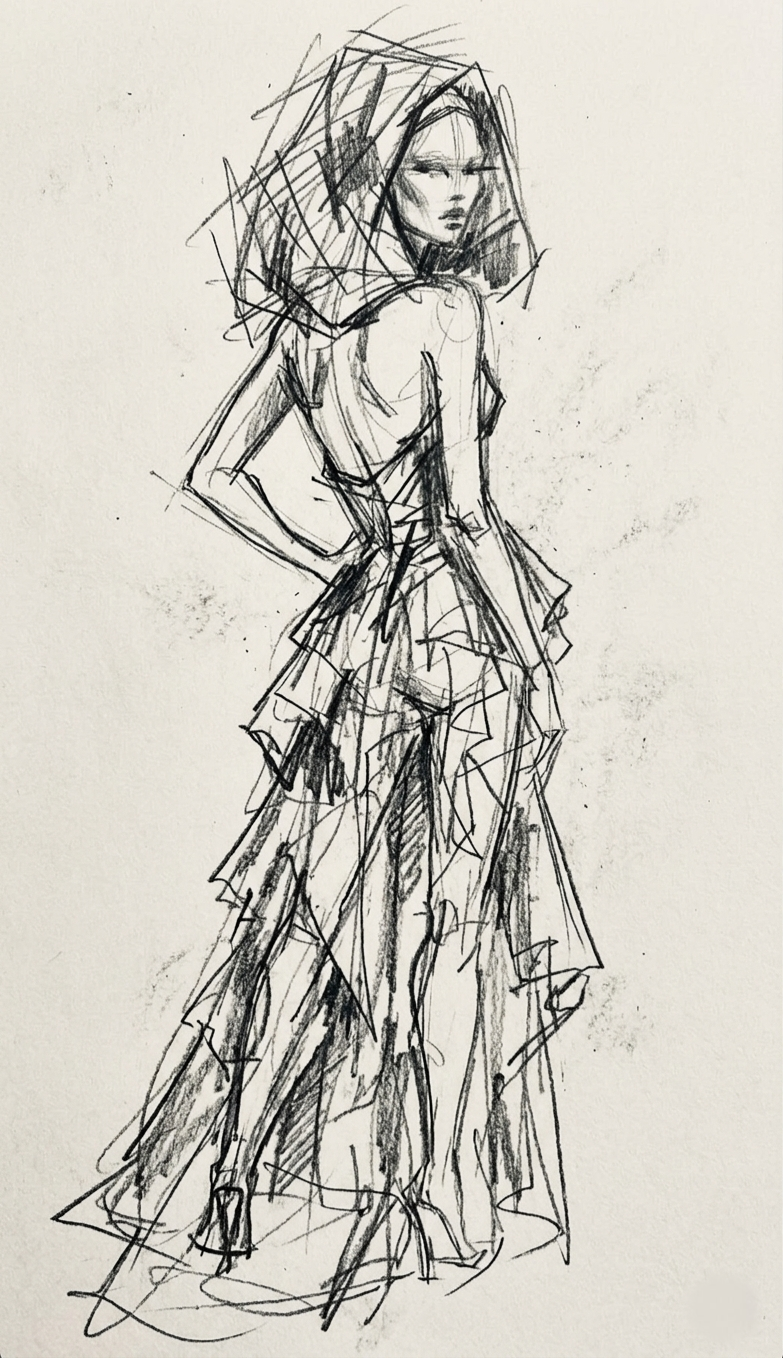
FEATURED IMAGE: Rough fashion illustration, edited by AI. Graphic by: Daniella Ripamonti
RELATED STORIES:
[ad_2]
Source link