
[ad_1]
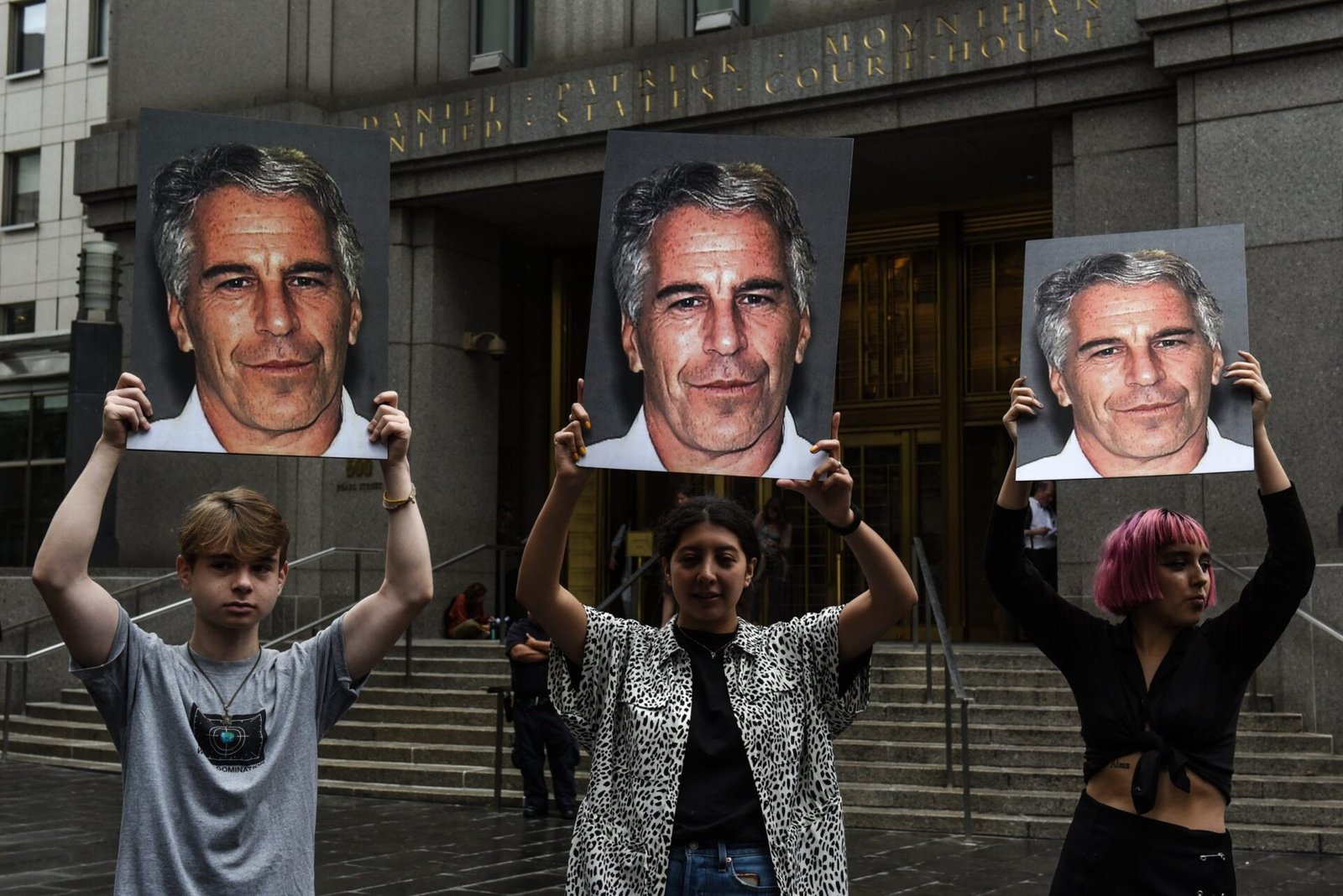
Amid the ongoing, often erratic, release of documents and photos related to disgraced sex offender Jeffrey Epstein, it’s clear that the once high-flying billionaire, who was found dead in a Brooklyn jail cell five years ago, had extensive ties to a number of high-profile art world figures. From former MoMA chairman Leon Black, who is known to have paid tens of millions of dollars to Epstein for art-related tax advice, to retail mogul and top art collector Leslie Wexner and artist Andres Serranno, who discussed the potential impact of Trump’s vulgar comments about women on the 2016 election—a range of art world names keep emerging in the slow release of information.
In the December 19 release of documents by the Department of Justice, more startling details have emerged about the story of Maria Farmer, an artist and former New York Academy of Art student who worked for Epstein. She was assaulted by both him and Maxwell, and threatened with violence when she sought to report and expose them as early as the mid-1990s—at least a decade before Epstein came under scrutiny from authorities. Farmer went directly to the FBI to report her allegations of abuse, including charges of child pornography, but her complaint was ignored. In a related complaint that Farmer filed against the Epstein estate several months following his death, she said she also received threats from Maxwell, who told her: “We’re going to burn all your art. And I just want you to know that anything you ever make will be burned. Your career is burned.”
Below is what we know so far about Epstein’s entanglement with various art-world individuals and companies. Being named or depicted in the files does not imply wrongdoing, and many of those identified have denied any misconduct.
Leon Black
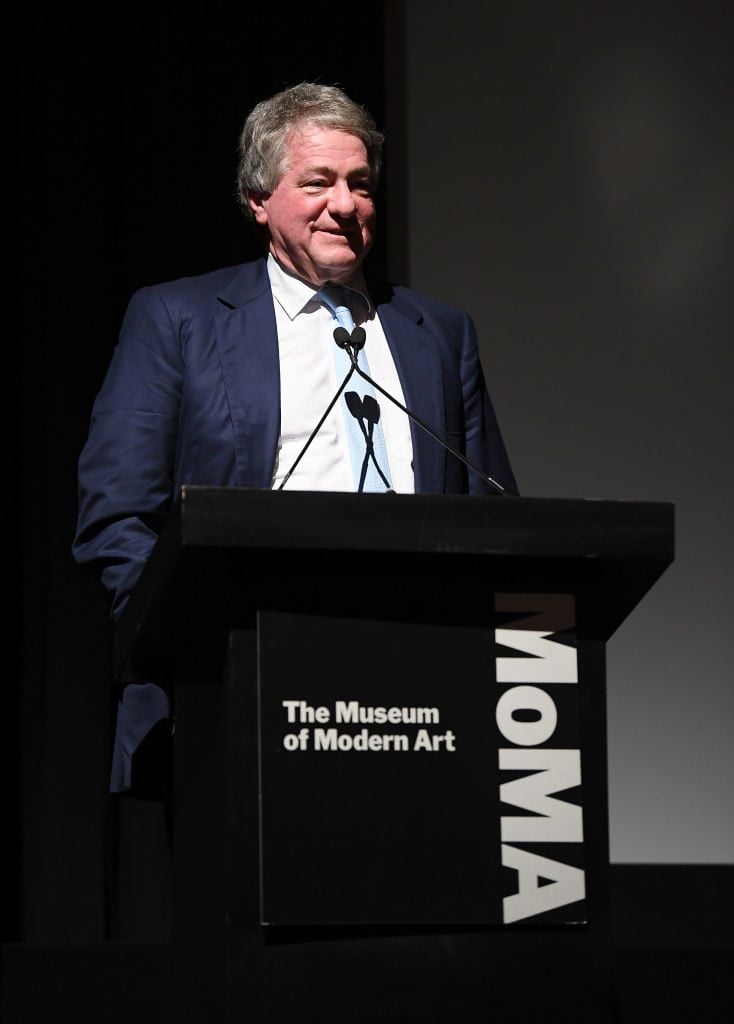
Leon Black at The Museum Of Modern Art Film Benefit Presented By CHANEL: A Tribute To Martin Scorsese, on November 19, 2018 in New York City. (Photo by Dimitrios Kambouris/Getty Images for Museum of Modern Art)
Black is still being investigated by the U.S. Senate Finance Committee over more than $150 million that he paid to Epstein for tax-related work between 2012 and 2017. For example, in 2016, the billionaire collector and former chairman of the Museum of Modern Art sold an Alberto Giacometti sculpture, Figure Moyenne II (1947), for $25 million to a trust controlled by Epstein, according to a report in the New York Times.
That same day, a Black-affiliated company used the proceeds from the Giacometti sale to buy a Paul Cézanne watercolor, Portrait de Vallier de Profil (1904–06), for $30 million, the Times reported. In order to avoid capital gains taxes, which are normally applied to art when an owner sells for a profit, Black, with Epstein’s assistance, took advantage of a 1031, or “like-kind” exchange. The tax strategy is no longer available to art collectors.
Related art transactions by Epstein and a holding company associated with Black’s art acquisitions were also the subject of U.S. Virgin Island subpoenas in 2020 linked to two works by Paul Cézanne and one by Pablo Picasso.
The now notorious 50th birthday book compiled for Epstein in 2003 by his former partner Ghislaine Maxwell, who is currently serving a 20-year prison sentence for sex trafficking, also reportedly contained a 16-line poem, said to be handwritten by Black. Titled “On the Occasion of Jeffrey Epstein’s 50th Birthday,” it referenced “Green eyeshades, schemes and plans, a unique tax strategy.” It was signed “Love and kisses, Leon.”
Asked for comment, Susan Estrich, an attorney for Leon Black, said via email: “Mr. Black asked for an independent investigation of his relationship with Jeffrey Epstein, and Dechert investigated and reviewed more than 60,000 documents and concluded that Mr. Black paid Epstein for estate planning and tax advice, no more, no less, and all vetted and approved by well-regarded law and accounting firms.
“At the same time, Epstein’s emails, to which Mr. Black never responded, make it clear that Epstein was a braggart who embellished and exaggerated his role and responsibilities in many ways.
“The emails were also abusive and disrupted the family office, and at a certain point, Epstein’s harassment and his relentless pursuit of more money crossed the line so Mr. Black ended the relationship. The latest release of emails further confirms the findings made in the independent Dechert Report.”
Read more:
U.S. Senators Probe Leon Black’s Payments to Epstein
Prosecutors Issue Subpoenas to Sotheby’s and Christie’s As Part of Epstein Investigation
Leah Kleman
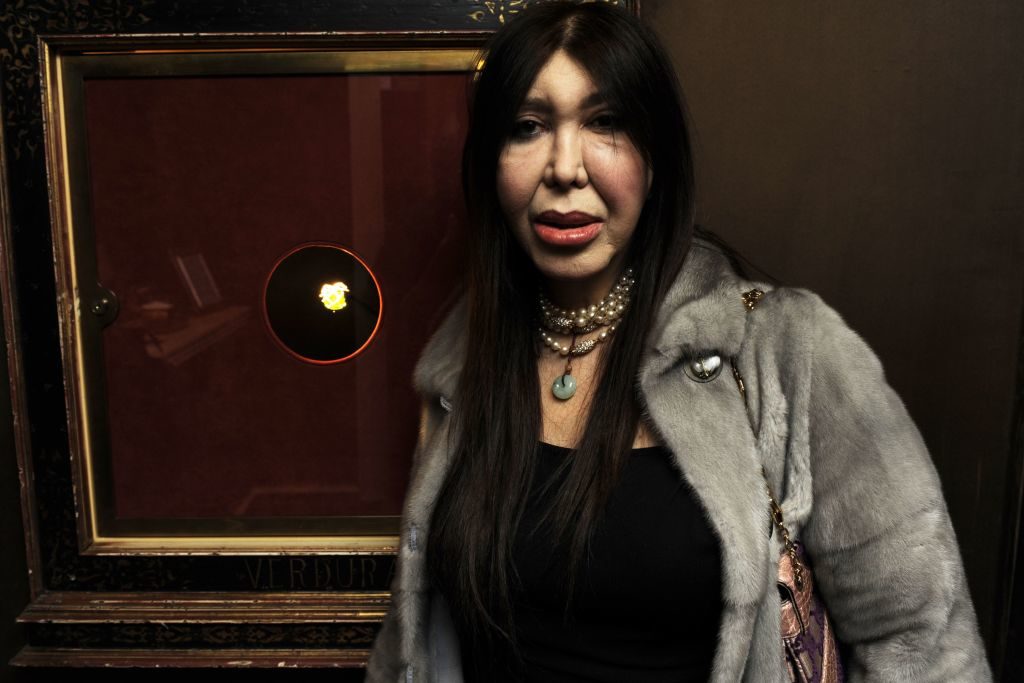
The art and antiques dealer Leah Kleman in 2010. Photo: Max Rapp / Patrick McMullan via Getty Images.
Art dealer Leah Kleman was included in a “little black book” contact list that Epstein kept. In one report, she described negotiating prices with Epstein as “something like a scene out of the movie Mad Max: Beyond Thunderdome.” Over the course of 25 years, he sought deals on works he hoped would make an impression on others, including for “shock value.”
Read More:
The Shell Game: Untangling Jeffrey Epstein’s Offshore Money Web
Andres Serrano

Andres Serrano in Paris in 2024. Photo: Joel Saget / AFP via Getty Images.
The first tranche of the Epstein documents, released in mid-November, include at least two direct email exchanges between artist Andres Serrano and Epstein.
In an October 10, 2016, email, Serrano discussed the 2016 U.S. presidential election and his feelings about the “outrage” at Trump’s sexist, misogynistic comments that at one point, threatened to derail his campaign. According to the files, Serrano, whose email address is redacted in the published correspondence, wrote: “Jeffrey, I was prepared to vote against Trump for all the right reasons but I’m so disgusted by the outrage over ‘grab them by the pussy’ that I may give him my sympathy vote. I’m sure Bill C said things, too. Andres.”
Asked for comment, Serrano told me over email: “Frankly, I had forgotten the exchange with Jeffrey Epstein but apparently I said it. I saw Donald Trump’s comment as locker room talk and it’s hypocritical to pretend that men and women don’t do it.”
Read more:
Epstein Files Reveal Correspondence With Andres Serrano
Leslie Wexner

Leslie Wexner at the 2016 Fragrance Foundation Awards in New York City. Photo: Nicholas Hunt/Getty Images for Fragrance Foundation.
Retail magnate and top art collector Leslie Wexner has been described as “the most important contributor to the staggering growth in Epstein’s fortune,” according to a recent deep dive New York Times report. The long running “unsolved mystery” is what exactly Wexner got out of the relationship. “Epstein’s modus operandi with other wealthy men—including the private-equity billionaire Leon Black—was to instill fear that their finances were a mess, that their advisers and even family members were inept or exploiting them and that only one man had the wherewithal to save them,” the newspaper reported. Wexner was also a contributor of an explicit note to the 50th birthday book.
Wexner who created the Wexner Center for the Arts, in Columbus Ohio, is known for his love of artists from the New York School, such as Franz Kline and Mark Rothko, as well as for blue-chip master Pablo Picasso.
Dmitry Rybolovlev
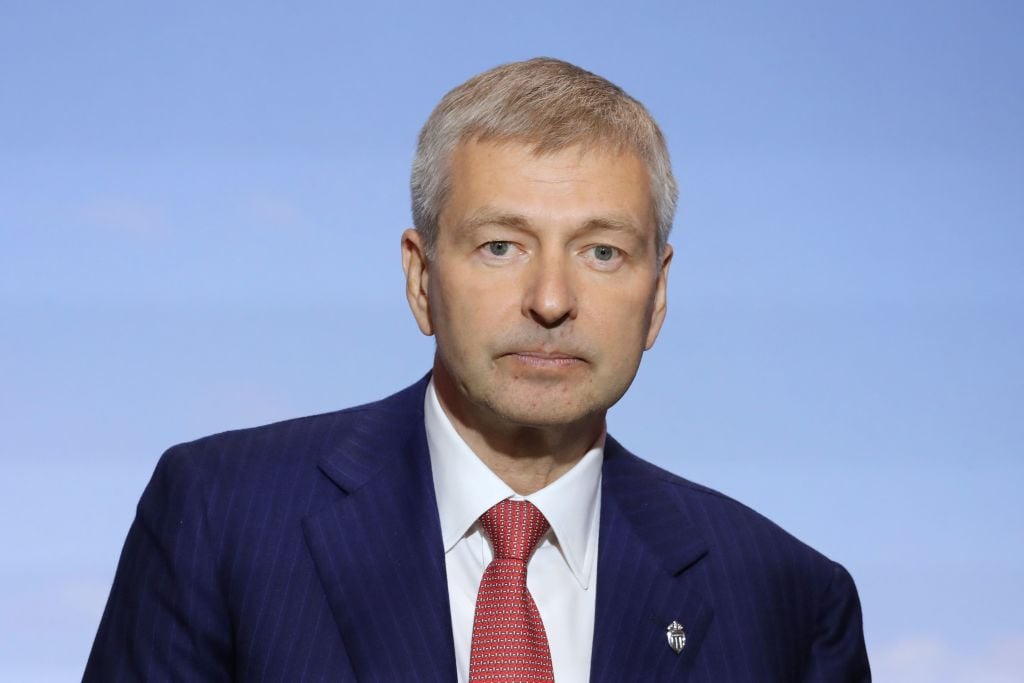
Dmitry Rybolovlev. Photo: Valery Hache/AFP via Getty Images.
Billionaire Russian businessman and art collector Dmitry Rybolovlev’s name comes up in at least two topics in the tranche of emails released in mid-November.
One is for his previous ownership of Leonardo da Vinci’s Salvator Mundi (1500). In a May 2019 email to journalist Michael Wolff, Epstein wrote, quoting a Vox article: “Salvator Mundi, the last known da Vinci painting in private hands, has an incredible provenance. Rybolovlev purchased it for $127 million in 2013 through his art dealer, the Swiss businessman Yves Bouvier. Bouvier, the owner and operator of several freeports, bought the painting for $80 million with the intention of selling it to Rybolovlev at a steep profit. Its owner before Bouvier, the New York City-based gallerist Robert Simon, found the painting at an estate auction in New Orleans in 2005. He paid just $10,000.”
In a separate May 2019 email, Epstein’s accountant Richard Kahn discussed a by now well-known real estate transaction in Palm Beach, in which Rybolovlev paid around $96 million for an an oceanfront property owned by Trump, which he purchased for just $41.4 million four years earlier.
According to Kahn: The property “was purchased for $96 million by Dmitry Rybolovlev, a Kremlin-linked industrialist—which meant Trump made $55 million on the deal despite risking none of his own money. Wolff offers two possible theories for the deal. The author suspects that Trump may have earned a fee for hiding a shadow owner who possibly was funneled cash by Rybolovlev for reasons beyond the property’s value. Or, Wolff theorizes, Rybolovlev essentially bought the house from himself, with Trump as an intermediary, to launder ill-gotten money. ‘This,’ Wolff wrote, ‘was Donald Trump’s world of real estate’.”
Read more:
What Those Jeffrey Epstein Emails About Leonardo’s Salvator Mundi Really Mean
Jeff Koons
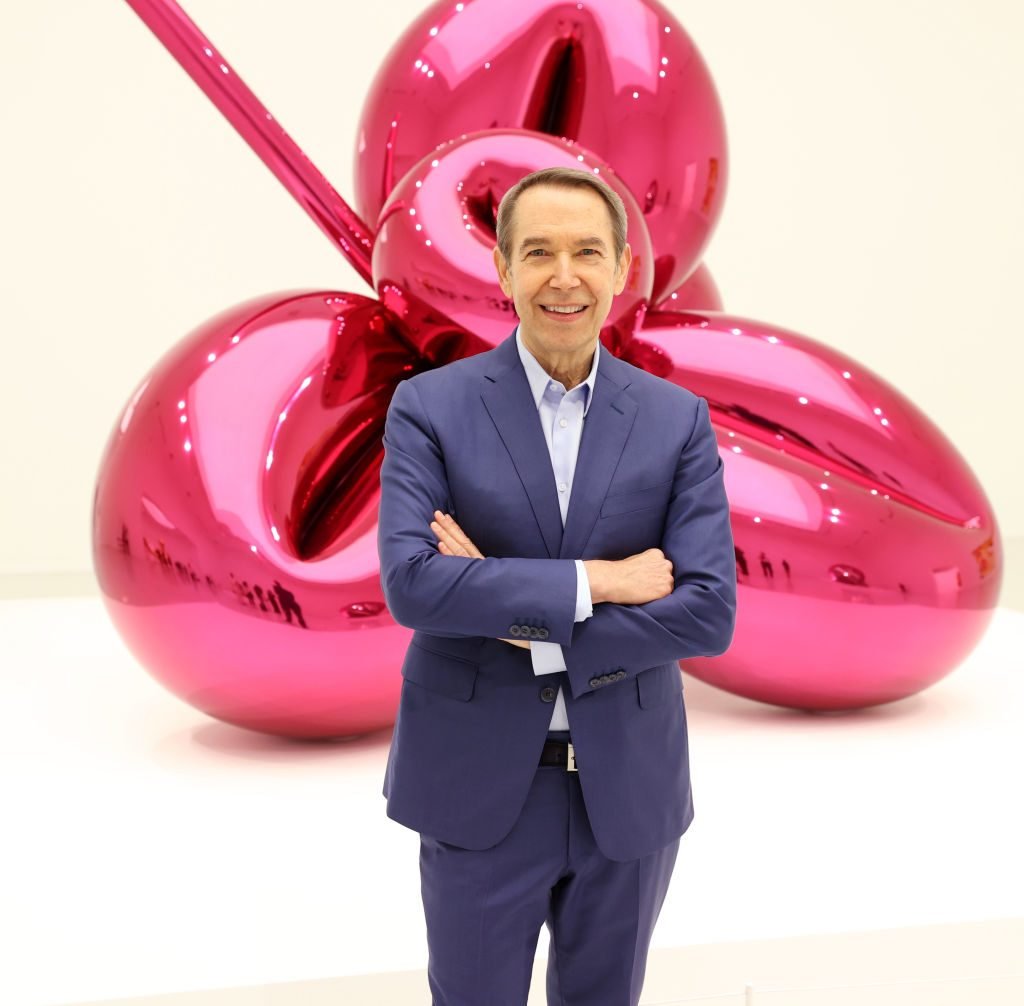
Jeff Koons during the press preview of his exhibition “Lost in America” on November 20, 2021, at Qatar Museums. Photo: Cindy Ord/Getty Images for Qatar Museums.
Koons, who is the most expensive living artist at auction, gets a passing mention in a May 2023 Wall Street Journal report, indicating that director Woody Allen and Epstein had at one point planned a visit to Koons’s studio. The artist did not respond to the Journal’s request for comment.
Christie’s and Sotheby’s

From left to right: Christie’s New York headquarter. Photo: Beata Zawrzel / NurPhoto via Getty Images; Sotheby’s New York headquarters. Photo: Alexi Rosenfeld / Getty Images.
As far back as five years ago, in December 2020, a few months after Epstein’s death, auction giants Sotheby’s and Christie’s were hit with subpoenas by authorities in the U.S. Virgin Islands as part of their ongoing investigation into Epstein. The subpoenas demanded that the auction houses turn over documents relating to Epstein’s art purchases. A third subpoena, sent to a firm called the Chicago Deferred Exchange Company, also focused on his art trades. The news was first reported by Chris Spargo in OK! magazine.
Read More:
This article was updated on December 22, 2025, at 9.15 a.m. ET, with details from the December 19 release of documents by the Department of Justice.
[ad_2]
Source link