
[ad_1]
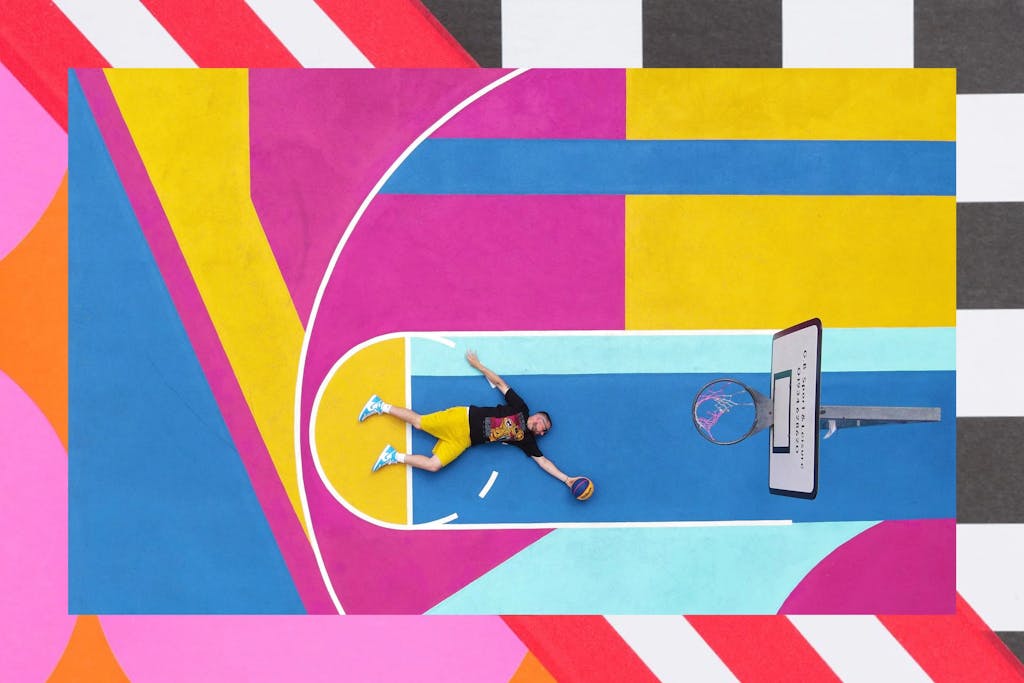
For Gareth Roberts, associate creative director at Bluemarlin, creativity doesn’t stop at the studio door. A former England U18 player, Roberts has turned a personal passion into a national movement. We caught up with him to discuss Project in the Paint – an initiative transforming neglected courts into vibrant public art – and how a “side hustle” evolved into a partnership with Basketball England.
DW: How did this journey begin? What pulled you into regenerating basketball courts?
Gareth: It began with my belief in creativity as a force for good. I played briefly for England’s U18 team, and basketball genuinely shaped who I am. It gave me focus, discipline and confidence – life skills that keep a young person on the right path.
For me, this project is a creative exercise, but not in the commercial sense. It’s creativity for community benefit: urban regeneration, youth engagement, and transforming neglected outdoor spaces into something beautiful and meaningful.
DW: That instinct became Project in the Paint. How did you get it off the ground?
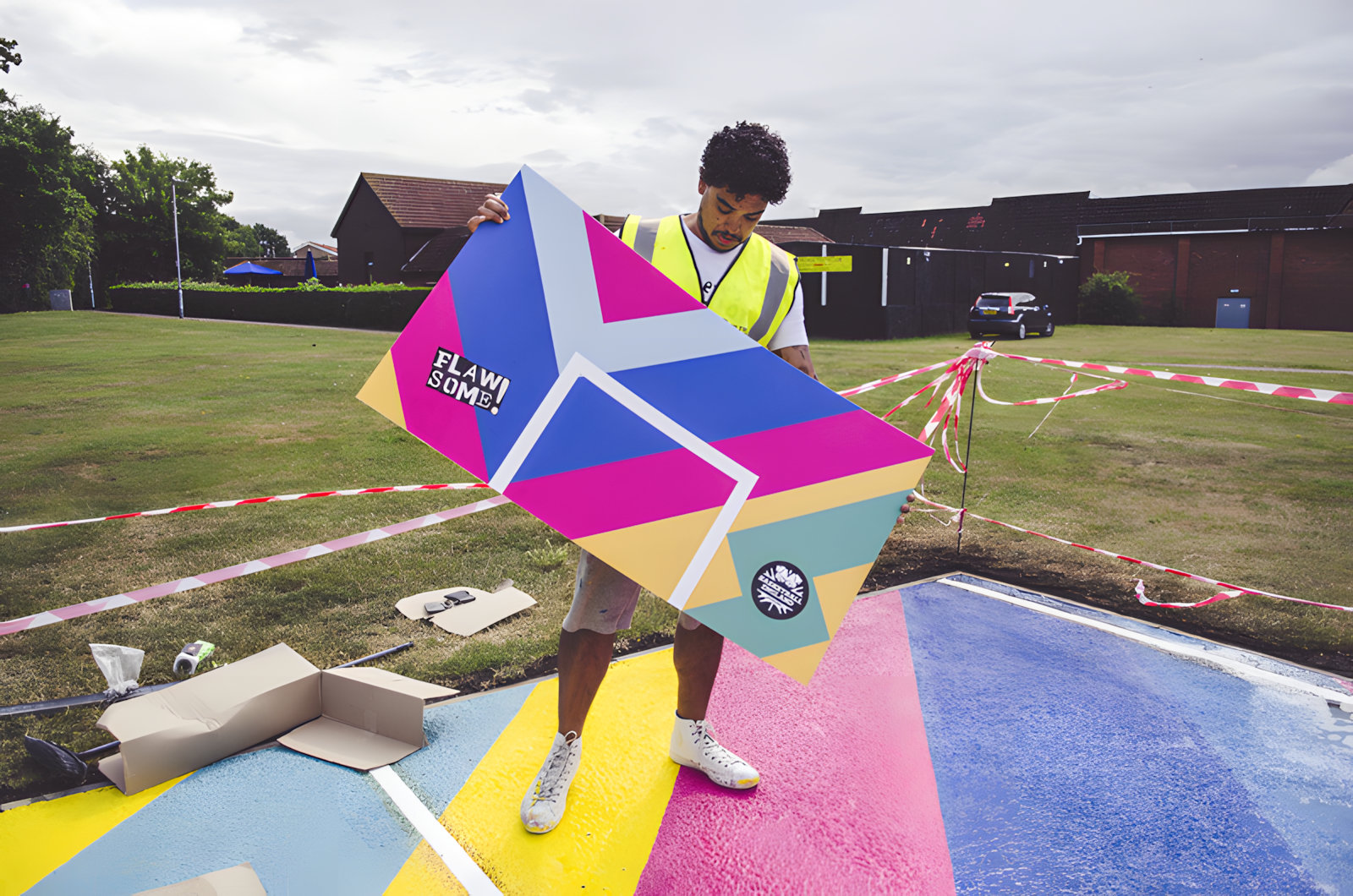
Gareth: Back in 2017, I had the idea to turn outdoor courts into large-scale works of public art. Basketball is one of the UK’s most-played sports among young people, yet it receives a fraction of the funding of football or rugby. Outdoor courts are where most people encounter the game, but they are often the most neglected parts of a park.
I wanted to use creativity to alter behaviour. A beautifully painted court signals care. It activates “broken windows theory” – when a place looks valued, people treat it with respect.
I launched a pilot as a crowdfunding project with about £3,000. Basketball England heard about it, saw it aligned with their mission, and agreed to match-fund half of it. That was the start.
DW: And that relationship with the governing body seems to have snowballed?
Gareth: It has. They launched Project Swish, a campaign to distribute free nets to outdoor courts across the UK. I messaged them offering to design the campaign logo pro bono. Over time, that logo has become a flagship brand for the organisation.
Later, they partnered with Wilson Sports and asked me to design a limited-edition basketball for the campaign. That ball now funds regeneration projects. I’m on my second ball design in four years, and some courts – like those in Manchester and Birmingham – are actually painted to match the pattern of the ball. Seeing the design scaled up from a product to architecture is surreal.
DW: You mention the visual language – what are your influences there?
Gareth: Basketball graphic culture is very different from British sports. Football leans into heritage – crests, subtlety, tradition. Basketball is modern, immediate, and dynamic.
My style draws heavily on 90s Black street culture, hip-hop, Memphis design and Afrofuturism – fusing African tribal patterns with modern digital techniques. That combination produces vibrant visuals that feel right at home on a court. They energise the space.
DW: The project has started attracting serious institutional attention, hasn’t it?
Gareth: It has. Birmingham committed £600,000 to outdoor basketball as part of its Commonwealth Games legacy, resulting in 17 regenerated courts.
Project Swish also won bronze at the Sports Business Awards, competing against clubs like PSG and Newcastle United. For a grassroots, design-led initiative to stand out in that company was incredible. It has prompted conversations with government departments about increased funding. It’s amazing that a small email offering creative help has grown into something shaping national impact.
DW: How does a passion project of this scale sit alongside your day job as a creative director?
Gareth: I think creativity needs oxygen. Side projects stop you from becoming narrow in your thinking; you bring new energy back into the studio.
When I first interviewed for my role at Bluemarlin, what caught their attention wasn’t just the big-brand packaging projects, but the entrepreneurial spirit behind this project. They said: “Everyone has a beer project. This shows something more.”
Most of the best designers I’ve met have side hustles – illustration, textiles, music. For them, creativity is a life practice, not just a profession that switches off at 6pm.
DW: What’s next for the project?
Gareth: More courts, more collaboration, and hopefully even more national investment. If one transformed court helps a young person feel welcome, confident or inspired in an overlooked corner of a city, that’s the impact I care about.
Become a Design Week member for £4/month or £40/year
Already a member? Sign in.
[ad_2]
Source link