
[ad_1]

There are many reasons art collectors decide to sell. The “three D rule”—death, divorce, debt—often applies, but collectors may choose to part with works that have gained value over time simply to free up resources for the next chapter of their collecting journeys. That might mean diversifying, acquiring work by a new generation of artists or adopting a more philanthropic approach by creating an infrastructure that supports artistic and cultural production, circulation and impact in the communities they care about. That’s what motivated Detroit philanthropist and art collector Jennifer GIlbert to sell several masterpieces from her collection with Sotheby’s. Proceeds from the sales will support Lumana, a new arts nonprofit in Detroit set to launch in 2027 that will serve as a hub for artists, designers and cultural institutions in Little Village on the city’s east side.
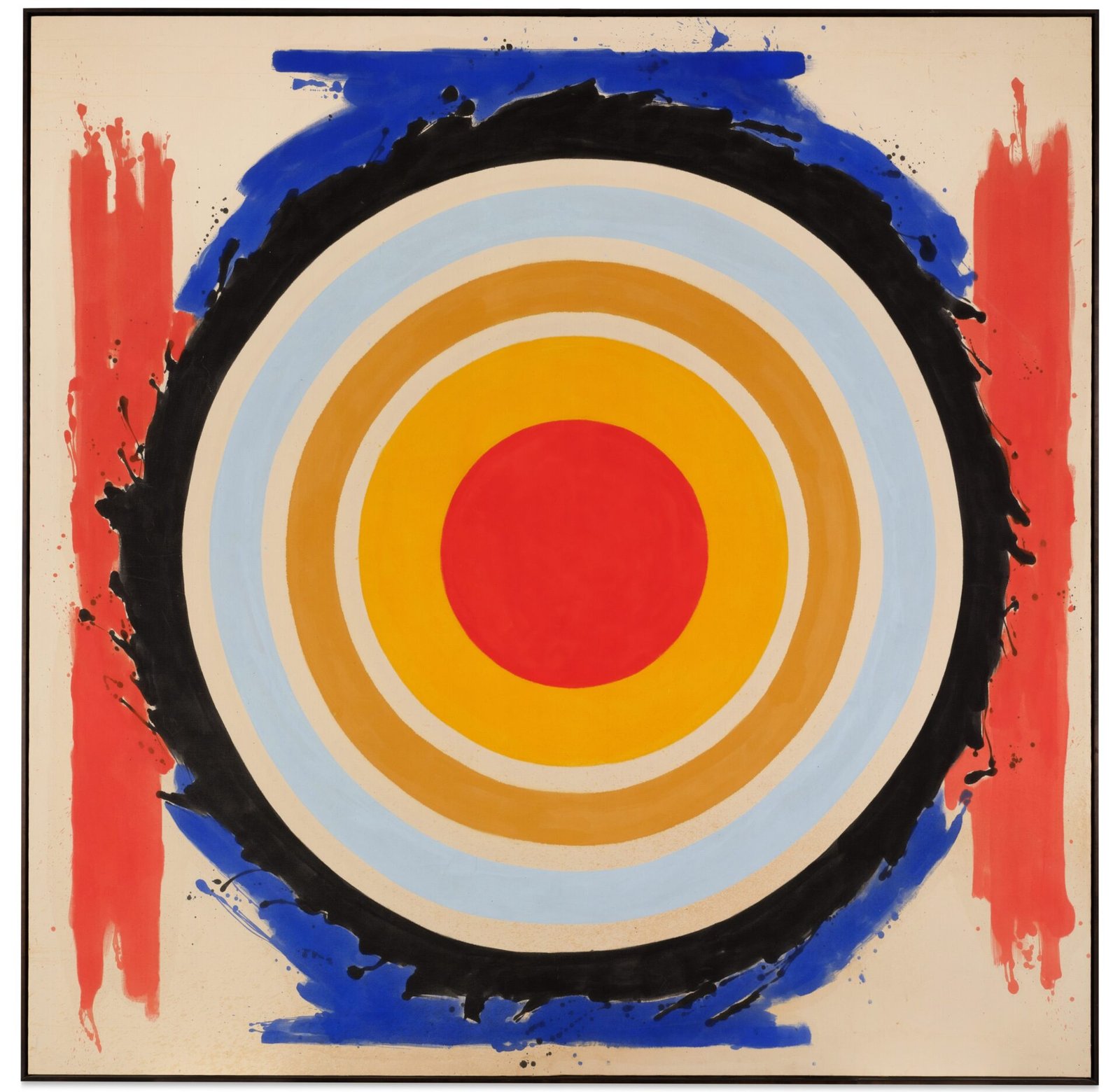
Among the works going on the block is Joan Mitchell’s Loom II (1976), created during an exuberant period when she began incorporating her most celebrated sweeping, vibrant strokes of color inspired by the energies and hues of the French countryside. It will appear in The Now and Contemporary Evening Auction on May 14 with an estimate of $5-7 million. Also in the sale is a rare example of Kenneth Noland’s early Concentric Circles, Circle (1958), with an estimate of $4-6 million—the highest ever for a work by the artist at auction. Additional works headed for the rostrum include a rare 1950s piece by George Rickey, Orenary (Space Churn Theme) (1955), estimated at $50,000-70,000, in the subsequent Contemporary Day Auction, and a significant example of Harry Bertoia’s wire constructions, Untitled (c. 1950), estimated at $80,000-120,000, in Sotheby’s Important Design sale on June 11. Ahead of the three sales, Observer spoke with Gilbert about how her journey as a collector and philanthropist led her to this decision.

For Gilbert, the desire to collect art stemmed in part from a practical impulse: she wanted to make her house feel like a home. “I wouldn’t have called myself a collector back then. These works were ones that fit the space, our budget, and other things that my former husband and I could agree on,” she recalls. Soon after, she was introduced to the auction houses, and in May 2013 she acquired Kenneth Noland’s 1958 painting Circle, which she describes as “the catalyst” for what was to come. That same year, she also acquired works by Mitchell and Ruth Asawa, with the Rickey and Bertoia following shortly after. “From there I was hooked.”
At first, collecting was about living out a dream of owning works by artists she had studied in college art history classes. “My love of art history came from my studies, and I was so grateful to be able to live with them,” she says. All the works that have entered her collection over the years conjure specific feelings and memories of the moments when they were acquired. “I really don’t have a favorite. They are all appreciated in different ways and for different reasons.” Yet both the Noland and the Mitchell were early and defining auction acquisitions. “The Noland was the first piece that I ever bought at auction, and certainly the most expensive one I had ever purchased at that point. That acquisition marked a turning point for me and instilled a sense of confidence and agency in collecting that I didn’t have before.”
All the works in the sales have lived with Gilbert in her homes since their acquisition, except for a brief interruption during renovations. While she will miss them, she is also excited for them to go on and live another life with someone who will love and appreciate them. “The fact that they are being sold to fund opportunities for living artists makes it gratifying in so many ways,” she says, adding that Lumana represents an important stage in her evolution as a collector and patron.

When she first started collecting, even though her primary goal was to decorate her home, Gilbert considered purchases through the lens of investing, which made her most comfortable with historic works and the secondary market. “I had to love them and want to live with them, but they also needed to have a proven track record,” she recalls. Yet she soon began engaging more deeply with contemporary art and with living artists whose visions, ideas and career trajectories she could follow and contribute to. “I fell in love with not only the works themselves, but with the artists behind them. I realized that my support of their practice could make a difference far beyond myself.”
Though she loves all art, Gilbert now finds deeper meaning in works by artists she has been able to meet, whose processes she has learned about and whose stories she has heard. “I feel so lucky to be able to steward these pieces of history, and hopefully make a positive impact on the artist at both a personal and professional level.” Until recently, she had relied on a small circle of trusted friends in the art world to bring things to her. Now that she has more time and freedom to travel, she is expanding her network across galleries, auction houses and advisors. “The more I discover and learn, the more I realize there is to learn,” she says, adding that another motivation for establishing Lumana was her desire to keep collecting. “I don’t believe in art sitting in storage, so Lumana will be a good way to make these pieces accessible to the broader community.”
At a certain point, Gilbert found herself asking: what’s next? “I knew that I wanted to keep collecting and actually spend more time in that world. It was also around the same time that I staged my first exhibition, “Seen/Scene,” and learned how much I loved sharing the works with others.”
Gilbert describes Lumana as a convergence of all her passions: art, design, architecture, community, philanthropy and the city of Detroit. “I believe that art can be a vehicle for building community, finding common ground with others and enriching people’s lives. To this end, Lumana—both the building and the programming within its walls—will remove barriers, build bridges and provide opportunities for the entire cultural ecosystem.” Detroit already has a vibrant artistic community and an active museum landscape, and Lumana aims to foster relationships and partner with many of its existing players. The foundation’s inaugural program will launch in partnership with Cranbrook Art Museum.
“The plans are still evolving daily, but the goal will remain to leverage the space and its programming to positively impact as many people as possible, in whatever we do,” Gilbert says. Her hope is that Lumana will serve as a space where both seasoned market participants and the general public can connect with and enjoy art. “As a collector and patron, I’m guided by this desire for connection and drawn to artists and works that bring people into conversation,” she concludes. “Lumana will certainly stay in tune with the current and changing needs of the arts community, and our programming will evolve to support those.”

More art collector interviews
[ad_2]
Source link