

[ad_1]
Bruno Bischofberger, the Swiss art dealer who helped launch Warhol, Basquiat and Pop Art in Europe, passes away at the age of 86. Visionary, collector and patron, he was a decisive figure in international art of the second half of the 20th century.
Bruno Bischofberger, one of the most influential art dealers of the second half of the 20th century and a leading figure in the international contemporary art market, has passed away at the age of 86. The announcement of his passing was released by his gallery, Galerie Bruno Bischofberger, and family in a note remembering him as “a leading figure in the international art world,” capable of profoundly transforming the history of art collecting and promotion between Europe and the United States. “With his inexhaustible passion for art and culture, his incomparable vast knowledge, his critical eye, his determination and his visionary ability, Bruno Bischofberger was much more than an art dealer,” reads the statement released by the family. “He was a pioneer, a teacher, a patron and an artist in the broadest sense of the word. Without him, the history of art in the second half of the 20th century would have been written differently.”
The figure of Bischofberger was central in building a cultural bridge between Europe and the United States at a crucial time in contemporary art history. Born in Zurich on Jan. 1, 1940, he studied art history, archaeology and ethnography at the University of Zurich, later continuing his academic training in Bonn and Munich. From his younger years he showed a special interest in emerging artistic languages and the cultural transformations that were redefining the international creative landscape in the postwar period. In 1963 he opened his first gallery in Zurich, on Pelikanstrasse, initially under the name City-Galerie. It was an almost pioneering gesture for the Swiss art scene at the time. In the mid-1960s the European art system was still looking with a certain diffidence at the new American art, but Bischofberger immediately understood the revolutionary scope of those languages.
In 1965 he organized one of the first European exhibitions devoted to Pop Art in his gallery, exhibiting works by artists destined to become legendary figures in contemporary visual culture: Roy Lichtenstein, Robert Rauschenberg, Andy Warhol, Tom Wesselmann, Claes Oldenburg and Jasper Johns. His gallery quickly became an international point of reference for art collectors and critics.
In the 1970s Bischofberger further consolidated his role as a promoter of the American avant-garde, but broadened the scope of his own research. In fact, in addition to Pop Art, he began working with artists related to Minimalism, Land Art and Conceptual Art, such as Sol LeWitt, Donald Judd, Dan Flavin, Bruce Nauman, Joseph Kosuth and On Kawara. In parallel, he also supported the protagonists of French Nouveau Réalisme, including Yves Klein, Daniel Spoerri, and Jean Tinguely.
If in the 1960s and 1970s Bischofberger was one of the main mediators of American artistic culture in Europe, in the 1980s he became a key figure in the international establishment of Neo-expressionism. He was among the first to believe in then-emerging artists such as Jean-Michel Basquiat, Julian Schnabel, George Condo, Francesco Clemente, David Salle, Enzo Cucchi, Peter Halley, Miquel Barceló, and other leading figures in the new international painting scene.
Of all the relationships Bischofberger built throughout his career, the one with Andy Warhol probably remains the most famous and influential. The two first met in New York in 1966, initiating a professional and human relationship that was destined to last until the artist’s death in 1987. During a subsequent meeting in 1968, Warhol showed the Swiss gallerist a series of early works that had never been published. Bischofberger had the opportunity to select eleven works that are now considered seminal in the early production of the American artist, including paintings dedicated to Superman, Batman, Coca-Cola and several canvases from the Death and Disaster series. It was on that occasion that Warhol granted Bischofberger a lifetime right of first refusal on his future works, an exceptional privilege that testifies to the level of trust and creative complicity established between the two. That relationship helped redefine the international contemporary art market.
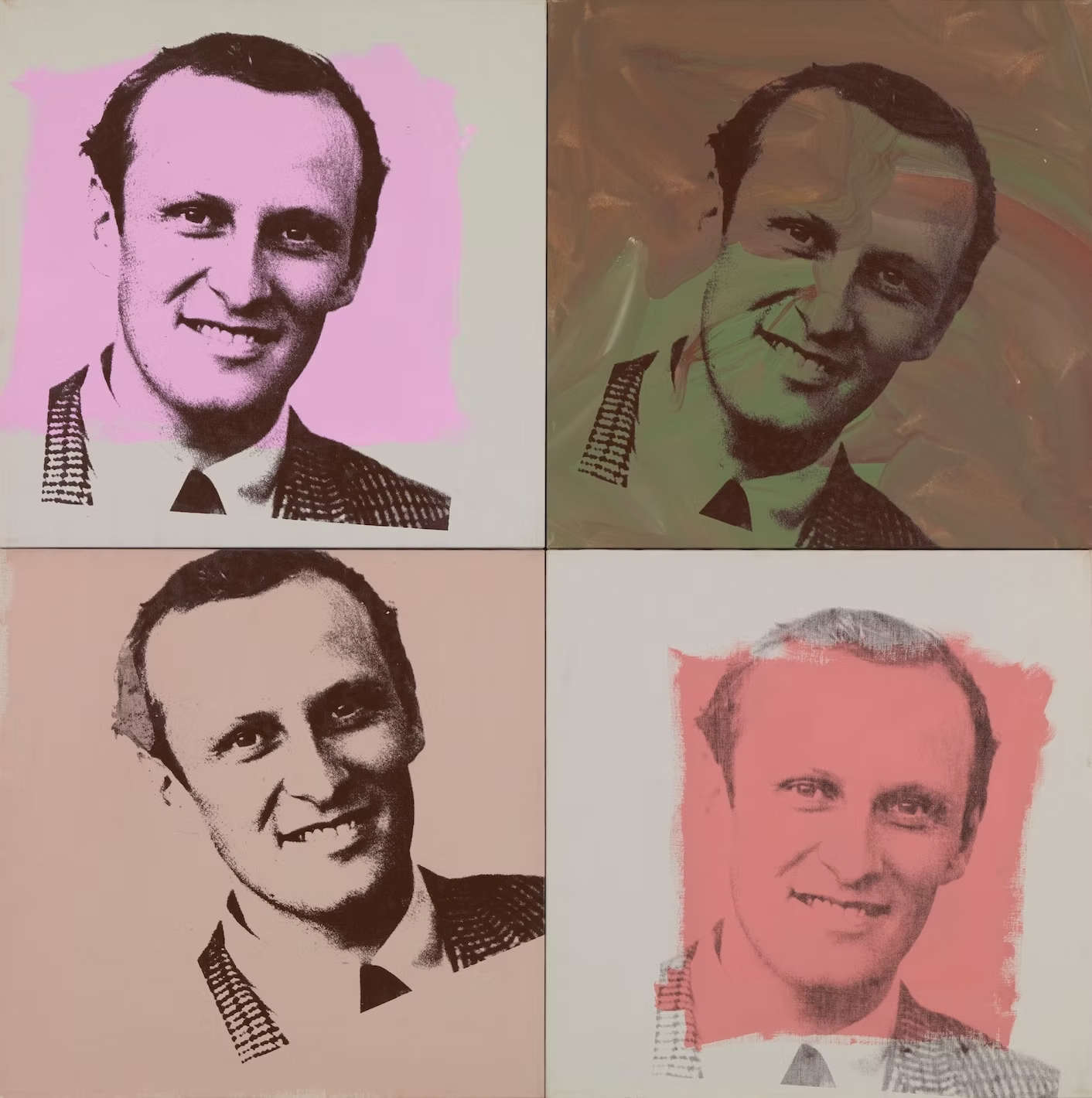
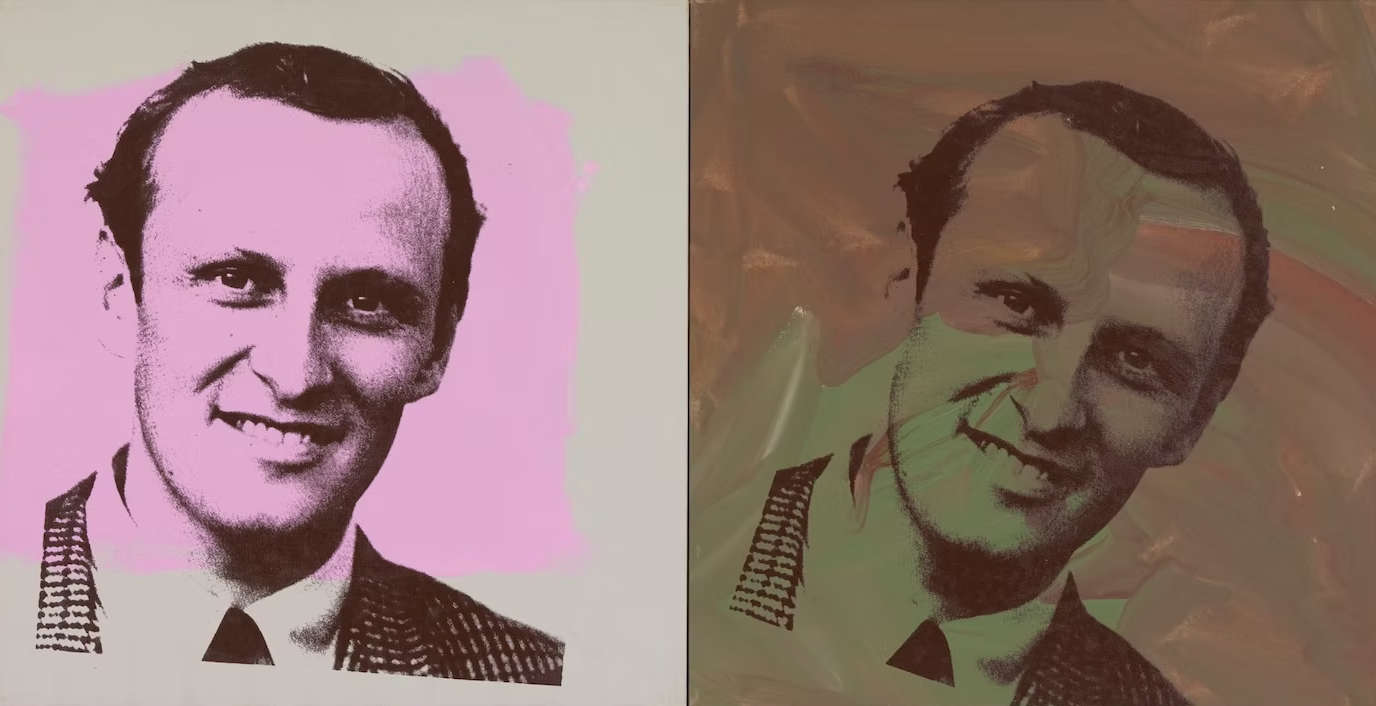
Bischofberger was not just a dealer or collector. He directly participated in the construction of Warhol’s public image and his creative system. In 1969 he helped co-found Interview magazine with the artist, which was destined to become one of the cultural symbols of the artistic and social New York of the 1970s and 1980s. In 1970 Warhol also produced a portrait of the Swiss art dealer. It was Bischofberger again who suggested a standardized system for the production of the American artist’s famous commissioned portraits, defining the size and prices of the works for the gallery’s clients. That business model became a major source of income for Warhol in the following years.
Equally decisive was Bischofberger’s role in Jean-Michel Basquiat’s career. The gallerist first saw the New York artist’s works in 1981 and already the following year became his principal dealer worldwide. The relationship lasted until Basquiat’s untimely death in 1988. It was Bischofberger again who facilitated the meeting between Warhol and Basquiat, sensing the potential of a collaboration that would become one of the most celebrated in contemporary art history. According to several accounts, the idea came about after Basquiat had made some drawings with Bischofberger’s daughter Cora, then a child.
The collaborations between Warhol, Basquiat and Francesco Clemente, encouraged by the Swiss art dealer, produced a once-in-a-lifetime artistic season that helped revive Warhol’s painting practice as well. Indeed, Basquiat convinced the Pop Art master to return to hand painting after more than two decades of almost exclusive use of silkscreen.
Bischofberger always cultivated close personal relationships with the artists he worked with. Many of those friendships lasted a lifetime and helped create an international network of collectors, curators and intellectuals who recognized the Swiss gallerist as a figurehead.
In 2013 the gallery left Zurich and moved to Männedorf, near Lake Zurich, within a complex carved out of a former industrial area. Beginning in 2005, Bischofberger had gradually developed the site with buildings designed by his daughter Nina Bischofberger and her husband Florian Baier. The new center housed exhibition spaces, storage facilities, archives and private collections.
Bischofberger was also a sophisticated cultural promoter. Famous became the advertising campaigns created on the back pages of trade magazines such as Artforum and Kunstbulletin. Instead of showing the works on display, those pages featured photographs of traditional Swiss life, creating a curious short-circuit between contemporary art and Alpine folk culture. In 2018, artist Peter Fischli and curator Hilar Stadler even dedicated an exhibition to those famous covers.
Throughout his career Bruno Bischofberger helped redefine the role of the contemporary gallerist. Not simply a commercial intermediary, but a builder of cultural relations, an interpreter of artistic transformations and a promoter of new aesthetic visions. His influence was such that it spanned generations and continents, profoundly affecting the dynamics of the global art market.
His personal history is intertwined with some of the most important figures in twentieth-century visual culture and with key moments in contemporary art history. Cinema has also returned his symbolic weight: in the film Basquiat directed by Julian Schnabel in 1996, the role of Bruno Bischofberger was played by Dennis Hopper.
Bischofberger leaves behind his wife Yoyo, daughters Lea, Nina and Cora, son Magnus and ten grandchildren. The family, along with the gallery and collections staff, announced their intention to continue the work of preserving and enhancing the cultural legacy built over more than 60 years. With the passing of Bruno Bischofberger, an unrepeatable season in the international art market and culture comes to a close. A season in which the gallery owner could still be a discoverer of talent, a creative accomplice of artists and a direct protagonist in the construction of contemporary art history.
 |
| Farewell to Bruno Bischofberger, the gallerist who changed the contemporary art market |

Warning: the translation into English of the original Italian article was created using automatic tools.
We undertake to review all articles, but we do not guarantee the total absence of inaccuracies in the translation due to the program. You can
find the original by clicking on the ITA button. If you find any mistake,please contact us.
[ad_2]
Source link