

[ad_1]
As the art world looks toward 2026, the mood is one of recalibration rather than acceleration. Value is increasingly defined by conviction and context, not speed or visibility. Voices from across Europe, the UK, and the United States point to a market that is decentralizing geographically while slowing intellectually, as new regions rise, and digital tools are re-evaluated as supports for trust rather than shortcuts.
How Collectors Learn to See: Taste, history, and responsibility
As the market cools, collectors are becoming more reflective about how taste is formed and sustained. Rather than relying solely on market signals, many are developing personal frameworks rooted in history, representation, and lived experience.
Collector Ralph Tawil, whose collection focuses on contemporary portraiture and socially engaged practices, describes his approach as guided by close attention to gender representation and art historical reference. For new collectors, he stresses the importance of experience over hesitation. “After making a couple purchases,” he advises, “it’s important to pause to make sure your collection is headed in the right direction.” Living with work, he argues, is essential to understanding one’s own affinities and knowing when to slow down can be just as important as knowing when to act.
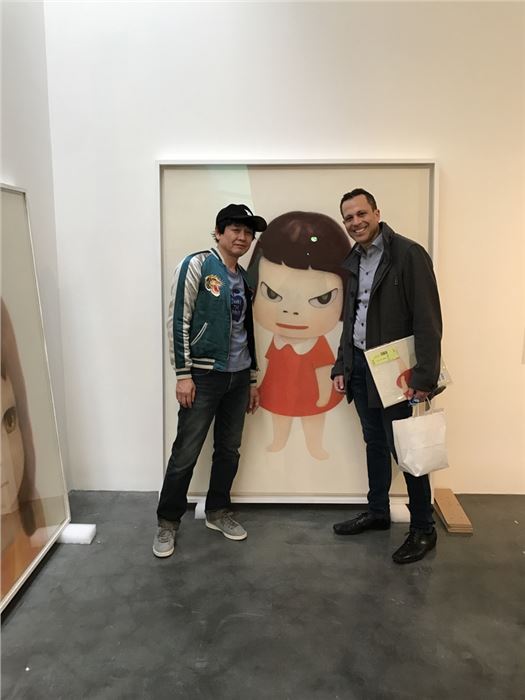
Ralph Tawil with artist Yoshitomo Nara, Courtesy of Ralph Tawil.
Tawil also emphasizes philanthropy as an extension of collecting values. Supporting museums and institutions, he notes, reinforces the cultural ecosystems that allow art to circulate meaningfully. Collecting, in this sense, becomes not only an individual pursuit, but a form of stewardship, one that connects private passion with public responsibility.
Buying Against the Market: Why conviction matters more than timing
One of the most pronounced shifts shaping collector behavior is a move away from chasing the newest names and toward reassessing artists whose markets have cooled. For many, the current moment presents an opportunity not for retreat, but for strategic reentry.
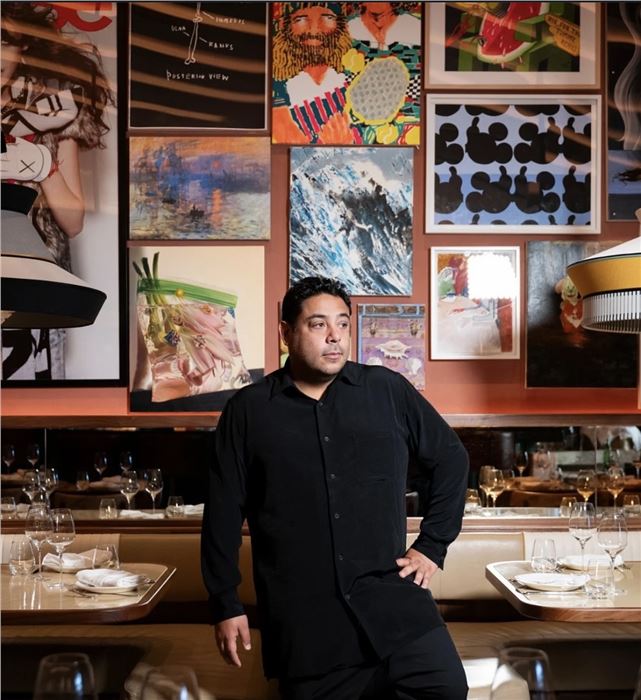 Photography by Alejandro Chavarria at Le Specialità, Courtesy of Andre Sakhai.
Collector Andre Sakhai, known for building collections through sustained, in-depth engagement rather than trend alignment, describes his approach as deliberately “buying against the trend.” He points to artists such as Wade Guyton, Seth Price, Sterling Ruby, Christopher Wool, and Richard Prince’s early jokes and Instagram works. These are figures whose markets peaked fifteen to twenty years ago and have since corrected. At the same time, he notes that emerging artists have become increasingly expensive, often priced at levels comparable to more established names whose markets are currently quieter. Despite this, he continues to follow and collect emerging artists he feels strongly about, including Japanese painters Shota Nakamura and Keita Morimoto.
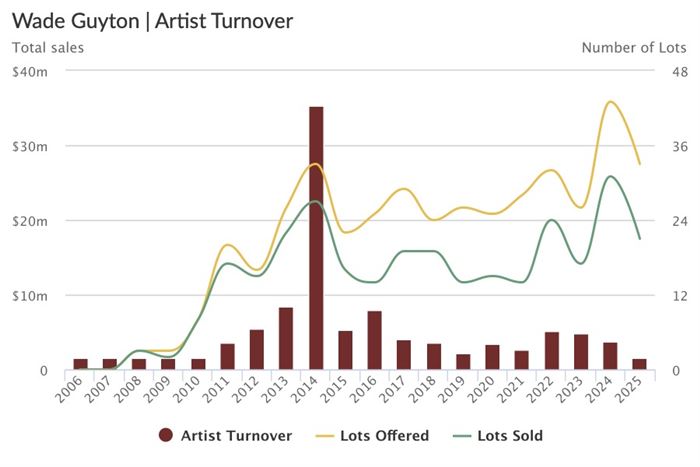 Change in Total Sales, # of Lots Offered and Sold: Wade Guyton
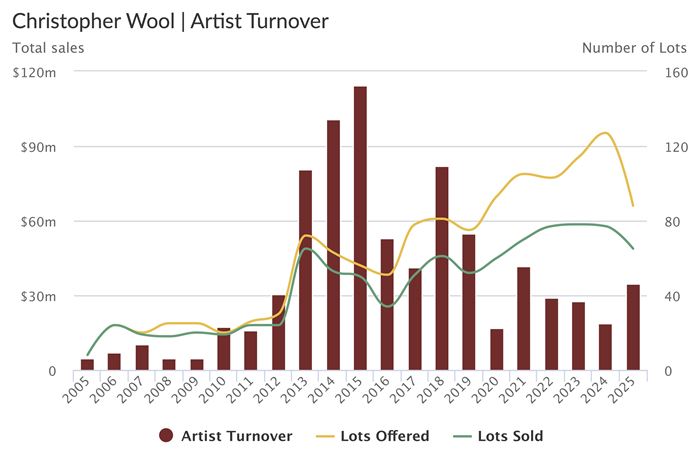 Change in Total Sales, # of Lots Offered and Sold: Christopher Wool
[ad_2]
Source link