
[ad_1]
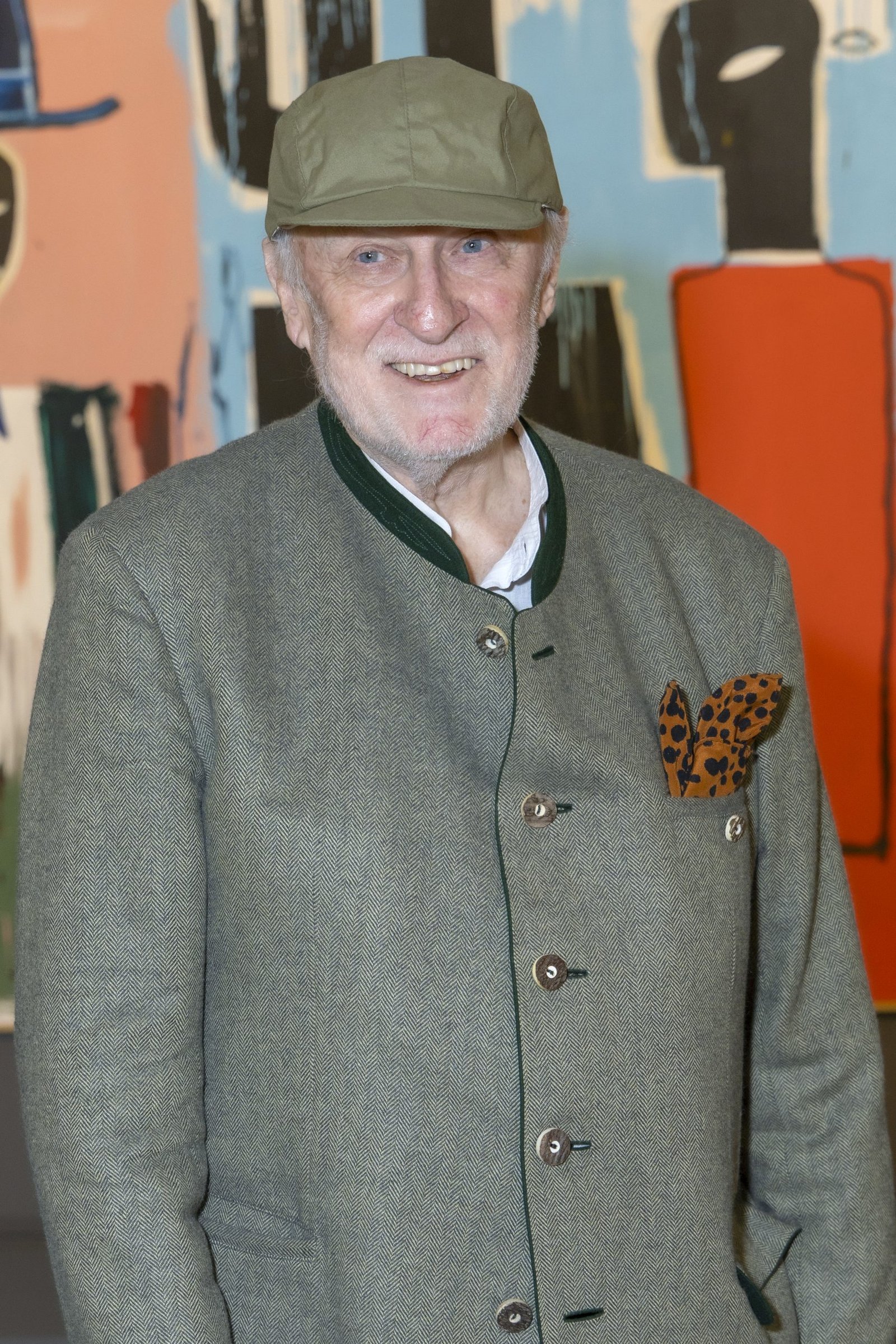
Legendary Swiss art historian, collector, and dealer Bruno Bischofberger, who championed the Neo Expressionist movement while bringing American artists to European audiences, died on Saturday at the age of 86.
“Without him, the art history of the second half of the 20th century would have been written differently,” Galerie Bruno Bischofberger stated in the obituary it released over the weekend. “He never put himself in the limelight, but shaped and inspired numerous renowned artists, art collectors, curators, and art enthusiasts.”
Bischofberger is survived by his wife of 55 years, Christina (also known as Yoyo), as well as his three daughters, one son, and 10 grandchildren.
Born in 1940, Bischofberger hailed from a long line of “soldiers, doctors, dentists, politicians, and artists” who called the quaint Swiss mountain village of Appenzell home, according to a 2023 publication on the jewelry designs of his daughter Cora. In 1958, Bischofberger started studying art history, archaeology, and folk art at the University of Zurich, before continuing his education at the universities of Bonn and Munich.
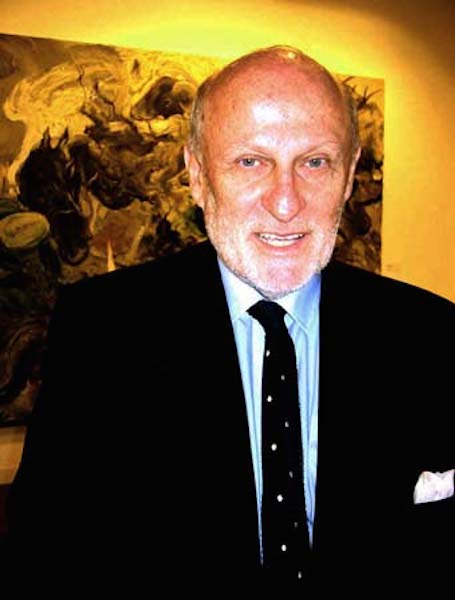
Bruno Bischofberger. Photo: © artnet
In 1963, Bischofberger opened his first art galleries—one in the heart of Zurich, and another in the high Alpine resort town of St. Moritz, making him the first art dealer to set up shop in Switzerland’s now very arty Engadine. Two years later, Bischofberger’s Zurich space staged its first-ever showcase of American Pop Artists like Roy Lichtenstein, Swiss-born Claes OIdenburg, and Tom Wesselman. Exhibitions honoring talents like Gerhard Richter, Frank Stella, and Sol LeWitt soon followed.
American virtuoso Andy Warhol had appeared in Bischofberger’s seminal 1965 Pop art exhibition. But, the pair didn’t meet in the flesh until the following year. Then, in 1968, “I tried to buy new paintings from him, but he declared to me that he would not make paintings any more,” Bischofberger wrote in “Andy Warhol’s Visual Memory” (2001), which the dealer purportedly considered “his most important text ever.”
Instead, Warhol sold the dealer 11 early hand-painted works that he had held onto, including several specimens from his “Disaster” series. “I had to pay what seemed a very high price at the time to convince the artist to part with his works,” Bischofberger wrote. In turn, Warhol offered Bischofberger first rights to every work he made—an agreement Warhol honored until his death in 1987. Bischofberger, meanwhile, proposed a formula for selling portrait commissions which the artist accepted and lived off over the ensuing years. In 1969, Bischofberger and his friend, noted art collector Peter Brant, pitched in to help Warhol found Interview magazine.
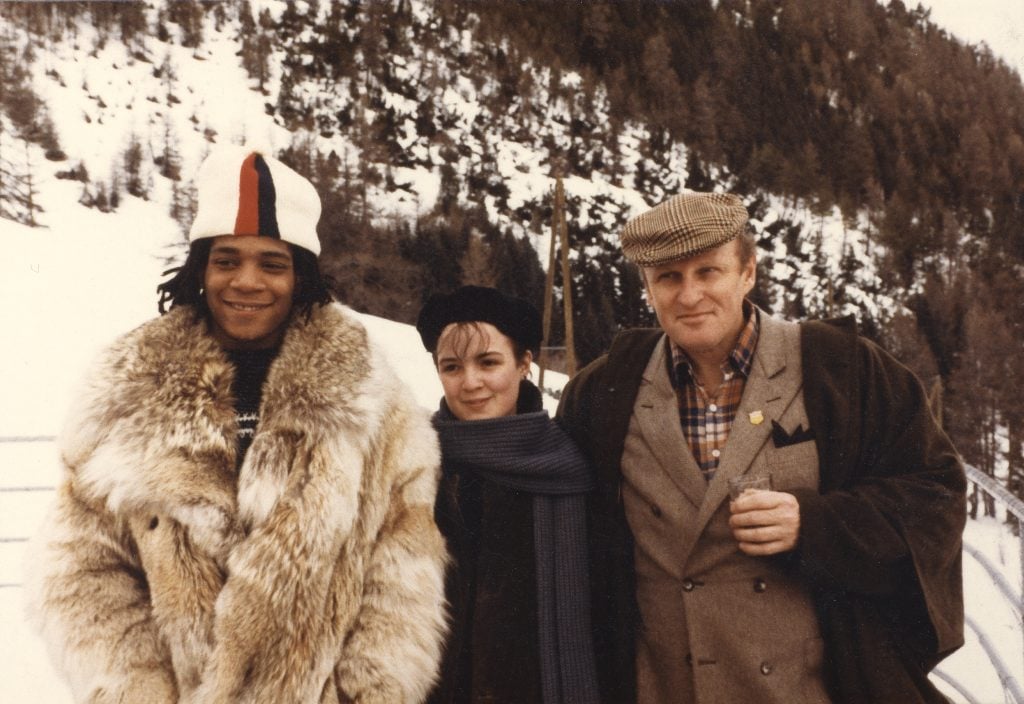
Jean-Michel Basquiat, Brook Bartlett, and Bruno Bischofberger at the Cresta Klubhaus in St. Moritz on January 30, 1983. Photo: Christina Bischofberger© Galerie Bruno Bischofberger, Männedorf-Zurich, Switzerland.
Art Basel burst on the scene in June 1970—and Bischofberger became one of its first exhibitors, participating until the 2010s. Bischofberger also spent the 1970s and 1980s throwing his weight behind the rising Neo Expressionist movement, pioneered by present-day art stars like Julian Schnabel, George Condo, and Enzo Cucchi.
Bischofberger first encountered Jean-Michel Basquiat’s art in his 1981 breakout exhibition “New York/New Wave” at the Queens-based PS1. (now MoMA PS1.) He began representing Basquiat in 1982, upon learning the artist had left Annina Nosei Gallery. Basquiat paid his first visit to Switzerland that year, staying with Bischofberger and making art in his house. One such piece, Pakiderm 3 (1983)—which appeared in last year’s groundbreaking exhibition of art from Basquiat’s Engadine era—even includes an elephant drawn by the young Cora.
Around this time, Galerie Bruno Bischofberger began its long-running tradition of taking out advertisements on the back cover of Artforum each month. What’s more, in 1983, Bischofberger facilitated the start of Warhol’s fabled collaboration with Basquiat, which, incidentally, induced Warhol to take up painting once more. Although Italian Neo Expressionist Francesco Clemente originally worked on this series alongside Baquiat and Warhol, the latter two artists continued making art together back in New York.
Bischofberger subsequently bought 26 of these pieces, and consigned 16 to downtown’s Tony Shafrazi Gallery in 1985. Although critics panned that show soon after it opened, this body of work has since received renewed attention and revivified auction prices. When Julian Schnabel made his 1996 film about Basquiat, Hollywood’s countercultural darling Dennis Hopper played Bischofberger.
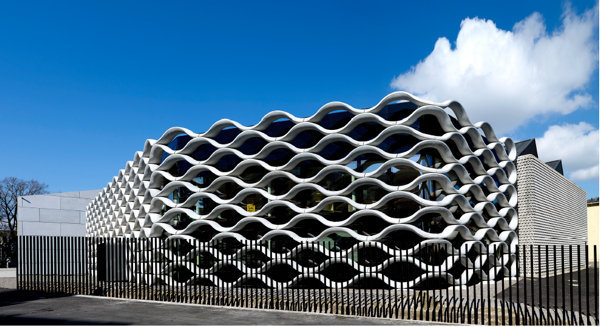
Bruno Bischofberger’s art complex in south east Zurich. Courtesy of Baierbischofberger Architects
Galerie Bruno Bischofberger ceased operations in St. Moritz in 2015, when it ceded the space it had rented since 2009 to Vito Schnabel Gallery, operated by Julian Schnabel’s son. That year, Galerie Bruno Bischofberger also announced plans for its current, 250,000 square-foot home in a former car factory on the southeastern edge of Zurich. Bischofberger’s daughter, Nina Baier-Bischofberger designed the complex alongside her husband, Florian Baier. The sprawling campus has since hosted two public exhibitions—and continues to house the Bischofbergers’ expansive collection of folk art, modern design, and photography.
The gallery has not yet responded to a request for comment regarding whether it will continue operations in light of its namesake’s death.
[ad_2]
Source link