

Why does the first bid feel so intimidating?
Because an auction compresses several decisions into one gesture. A bidder is not only saying, “I like this object.” The bidder is also accepting a price, a set of sale terms, a premium, a payment timetable and a practical responsibility for collection or shipping. Experienced buyers appear relaxed because they have separated those decisions before the auction begins.
The best way to become comfortable is not to imitate confidence. It is to build a checklist. Online platforms such as LAX.BID make the catalogue accessible from anywhere, but they do not remove the need to read carefully. A cautious first-time bidder may be better prepared than a regular who assumes every sale works the same way.
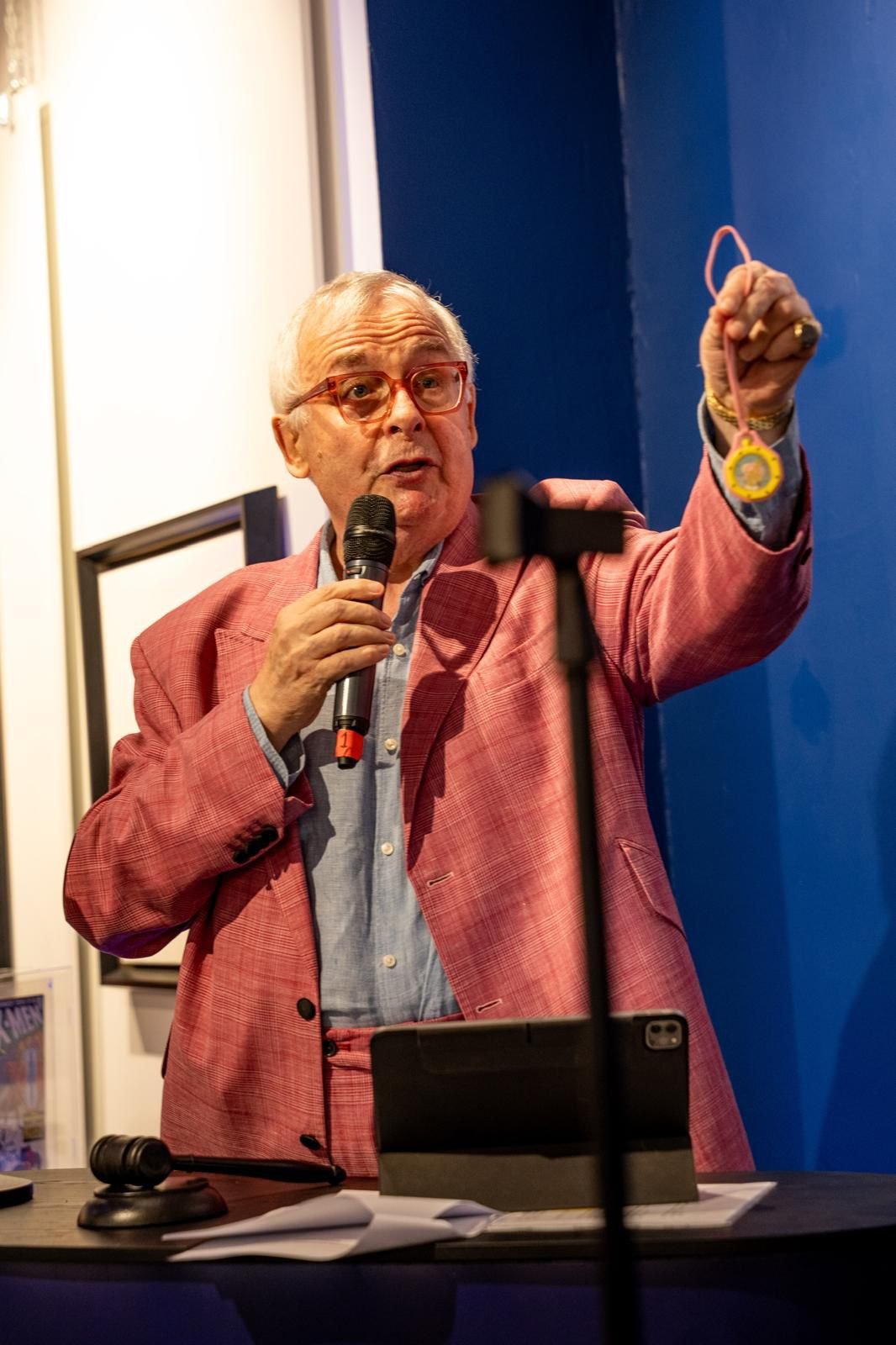
Q: Where should I start?
Start with the auction page, not the bid button. Confirm the sale date, whether it is timed or live, when bidding opens and closes, and whether in-person, telephone or absentee bidding is available. Then open the individual lot page.
Read the title, maker or artist, date, medium or model, dimensions, estimate, condition information, provenance and any documents mentioned. If the page uses a broad description such as “attributed to,” “after,” “style of” or “school of,” those words have specific implications. Ask before assuming.
If the object is physically available for viewing, consider using it. London Art Exchange’s physical gallery and private-viewing environment can be valuable here because a screen cannot fully communicate scale, surface, weight, colour or frame condition.
Q: What is the difference between an estimate, a starting bid and a reserve?
The estimate is a specialist’s guide to the range in which the lot may sell. It is not a guarantee and it may be based on comparables, condition, demand, provenance and the circumstances of the sale.
The starting bid is the amount at which bidding begins. It may be below the low estimate. A low opening amount is designed to encourage participation; it does not necessarily mean the seller will accept that price.
The reserve is the confidential minimum below which the seller is not normally obliged to sell. Some sales are offered without reserve, but that should be stated clearly. If the bidding does not reach the reserve, the lot may remain unsold even though bids were placed.
Q: What will I actually pay?
The hammer price is the winning bid announced when the lot closes or the auctioneer brings down the hammer. The invoice may also include a buyer’s premium, VAT where applicable, artist’s resale right in relevant cases, shipping, insurance, storage or other charges allowed by the conditions of sale.
This is why the maximum bid should be calculated backwards from the total amount you can comfortably spend. If a buyer can afford £10,000 in total, the maximum hammer bid may need to be lower. The exact calculation depends on the sale terms, so use the fee information for that auction rather than relying on a previous sale or another auction house.
The Bank of England held Bank Rate at 3.75 per cent on 18 June 2026. Higher rates do not determine the value of a painting or watch, but they affect the opportunity cost of spending cash and the financial pressure on both buyers and sellers. A sensible collector keeps liquidity outside the auction budget.
Q: Why do I need to register and verify my identity?
Registration is part of the trust system. An auction house needs to know who is bidding, which person or legal entity will receive the invoice and, in some circumstances, where funds are coming from. The level of verification may depend on the value, category and risk of the transaction.
Do this early. Waiting until the closing minutes can turn a serious intention into a missed opportunity. If the platform requests identity or payment information, check that the page is secure and explains why it needs the information. A buyer should never send sensitive documents to an unverified personal address simply because a sale is about to close.
Q: How much should I rely on photographs?
Photographs are evidence, but not a substitute for inspection. Request a condition report and additional images. When evaluating a print, ask about the signature, edition, margins, paper condition, fading, restoration, and frame. For watches, focus on the reference, serial number, movement, service history, replacement parts, and whether the box and papers are included. In the case of a car, check the title, mileage, mechanical history, corrosion, restoration, and collection arrangements.
A condition report is normally an opinion, not a warranty that every defect has been identified. That is not a reason to ignore it. It is a reason to read it as one part of the evidence and ask follow-up questions.
Q: How do I decide my maximum bid?
Write down the maximum before the sale becomes exciting. Consider the total cost, the evidence, comparable sales, your reason for buying and how long you are willing to hold the object. Do not increase the limit simply because another bidder appears confident. Their circumstances, knowledge and appetite may be entirely different from yours.
A maximum or advance bid can be useful because the system may bid incrementally on your behalf up to the limit. It can also protect you from making repeated emotional decisions. The risk is that a bidder enters an unrealistic maximum without understanding the fees. Preparation still matters.
Q: Is a bid legally binding?
In most auction conditions, a bid is a commitment. The precise position depends on the sale terms and applicable law, but “I changed my mind” is not normally a sufficient reason to withdraw after winning. Read the conditions before participating, particularly where online consumer rules, live-auction exceptions or trade status may affect the transaction.
If there is a technical problem, document it immediately and contact the auction house. Do not assume the platform will automatically reverse a result.
Q: What happens if I win?
The auction house issues an invoice and payment instructions. The platform normally releases the item only after funds clear and any required checks are complete. You then choose or confirm collection, storage or insured shipping. High-value items may require specialist packing, identity checks on collection or export documentation.
Keep the invoice, condition report, catalogue description, provenance documents and shipping record together. Those documents may matter years later if you sell, insure, lend or pass on the object.
Q: What if I lose?
Underbidding is not failure. It is market information acquired without the cost of ownership. Record the result, compare it with your limit and ask why the object attracted competition. A serious collector learns as much from the lots they do not buy as from the ones they do.
The Art Basel and UBS report found that online-only sales remained an important channel for new buyers even as the highest-value activity moved back toward live rooms. That makes the digital catalogue a training ground as well as a transaction channel.
Art Basel and UBS Global Art Market Report 2026
Q: How can London Art Exchange help?
A platform can display the lot, but some buyers need a conversation. London Art Exchange can provide a physical point of contact, viewing opportunities and guidance around artworks and collecting, while LAX.BID provides auction access and price discovery. The value of that relationship depends on transparency: the buyer should understand when the company is acting as seller, auctioneer, adviser or related business.
The aim is not to remove personal judgement. It is to help the buyer make that judgement with better information.
The final rule
The first bid is hard because it converts interest into responsibility. The solution is not bravery; it is preparation. Know the object, the evidence, the total cost, the maximum and the route after purchase. Once those five points are clear, the digital paddle becomes the least important part of the process.