
[ad_1]
Indian art has followed an upward trajectory in recent years. In 2025, an MF Husain had gone for $13.7 million (over Rs 126 Cr) at Christie’s in New York. In September the same year, Sotheby’s London achieved a landmark sale for FN Souza’s Houses in Hampstead, which hammered for £5.6 million (some Rs 70 Cr, at today’s exchange rate). This transaction set a new benchmark for the artist and headlined a “white-glove” auction that signalled a massive surge in global demand for the Bombay Progressives. Earlier, in 2023, an Amrita Sher-Gil sold for Rs 61.8 Cr at another SaffronArt auction.
Dinesh Vazirani, CEO and co-founder of SaffronArt, frames what’s happening as a convergence of mindset shift and economics. “Indians are really looking at their culture and giving it the respect it deserves,” he says. Indeed, while parts of the global art market in the US and UK have cooled following the post-pandemic peak, India has continued to register strong momentum at the top end of its auction segment, particularly in modern and post-independence masters. The question is can that value trickle down— and, importantly, can it reach smaller galleries, and young artists creating in shared studios.
Crowding the pedestal
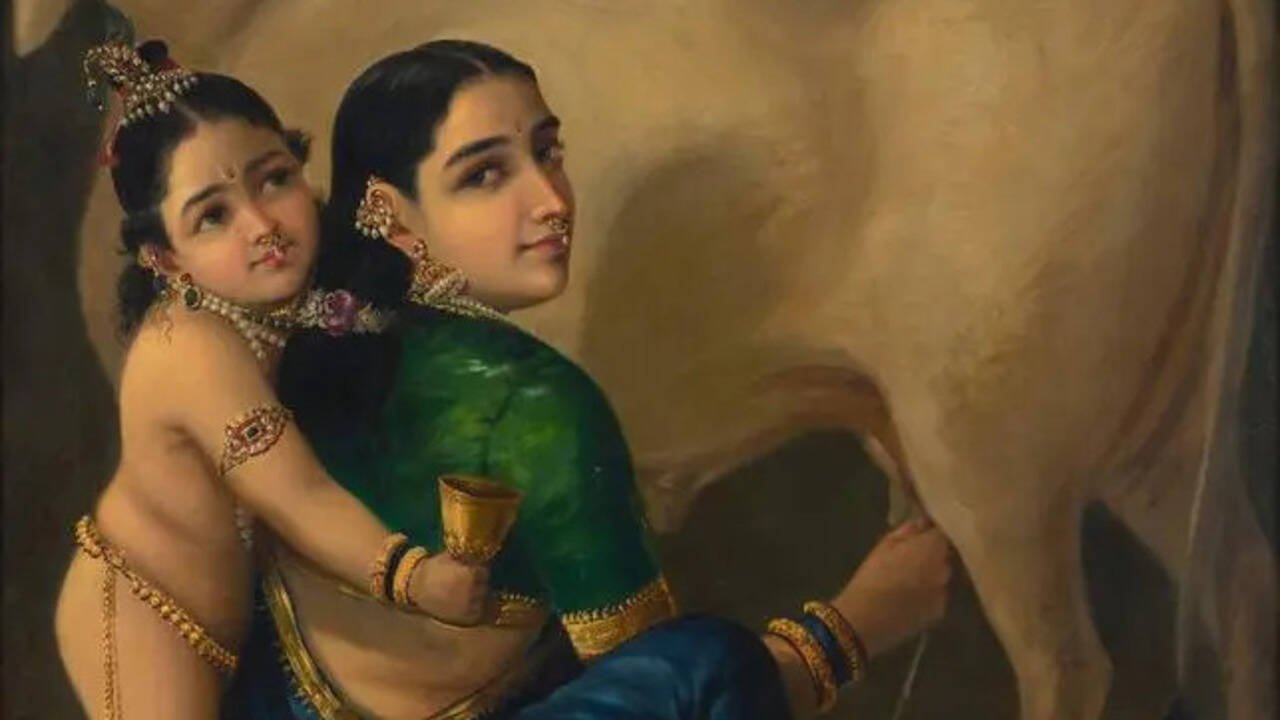
“We need to differentiate between all works increasing in value versus what is actually happening, which is that very select works are increasing in value,” says Mortimer Chatterjee, co-founder of Chatterjee and Lal at Kala Ghoda. He points out that the same two names, Husain and Ravi Varma, have dominated the top end for the last 25 years.
More to the point, auctions are secondary market events, Chatterjee explains. These works have already lived in private collections and belong to an established canon. “Gallery exhibitions, India Art Fair, or the Kochi Biennale — those are platforms specifically for the primary market, where you will find younger artists.” The cause-and-effect chain from auction prices to emerging artist visibility, he suggests, does not hold as directly as one might hope.
The varnish effect
Yet, there’s a different kind of halo effect that comes out of record numbers. It puts Indian art into conversations in London and NYC galleries or top collector circles. It sparks curiosity about what else might be unfolding across India’s art landscape. On this aspect, Chatterjee agrees: “One way to get Indian art visibility in the global sphere is through market pricing.”
Siddharth Somaiya, Chairman of the Board of Studies at Dr Shantilal K Somaiya School of Art, speaks about a broader awakening of global curiosity about Indian culture. “Everyone now wants to support places across the world which have generally been underrepresented but have a huge historical weight. The spotlight has been a long time coming,” he says. In February, he collaborated with Harvard University for the India Conference, which featured emerging Indian art on the university’s platform for the first time. He also recalls the New Museum in New York, reaching out through collector Sunita Choraria to explore support for newer Indian artists. Aparajita Jain, Director, Colaba-based Nature Morte, sees it differently: “The increased attention to Indian art can open doors for younger artists. But, currently, the attention tends to stay concentrated at the top unless it’s actively redirected.”
Vazirani points to the Venice Biennale as an example of platforms making the right moves to spotlight coming-of-age artists like A Bala and Asim Waqif. “That is an immense exposure for those young artists,” he says. “You will see over time that there will be very strong interest in their work.”
Tara Lal of Chatterjee and Lal offers the example of Arshi Ahmadzai, born in 1988, whose works are shaped by her journey through India, Afghanistan and Germany – these were recently on display at his Kala Ghoda gallery. “She’s an example of someone who’s very much a rising star and generating a lot of discussion,” she says.
Besides, Vikrant Bhise was recently named Emerging Artist of the Year at a 2026 awards event. He has drawn international attention for work rooted in Mumbai’s labour histories and caste realities, with major presentations at the Berlin Biennale and São Paulo Biennale. Also gaining recognition is Sahej Rahal, another Mumbai artist, whose speculative, myth-making practice spans installation, performance, and digital media. And then there’s Amol K Patil, whose socially engaged installations and performances — seen at platforms such as documenta fifteen — draw on Mumbai’s working-class histories and urban memory.
An unfinished canvas
That sort of attention does edge up prices for younger artists. But as Jain notes, a lot more is required for a healthy ecosystem, beginning with sustained engagement with art. Already, she says, “People are more curious, more willing to engage, and not just with established names.”
Chatterjee believes some sort of state-funded mechanism that encourages artistic risk-taking would be helpful. In the UK, the Arts Council of England, for instance, distributes lottery money as grants that allow artists to make work outside commercial pressures. The absence of such a system here, he notes, hampers an artist’s ability to experiment and to create higher-risk works. He envisions an Arts Council of India, a neutral body disbursing grants on merit.
Somaiya also sees the need for more art schools, more museums, and more teachers and mentors within the ecosystem. But the more critical infrastructure, in his view, is still, “the audience”. Without art appreciation embedded in curricula, the collector base will stay narrow, and the ecosystem fragile, he suggests. But he’s hopeful, too. Particularly because galleries here, he says, are already working with emerging artists through grants, education and curated opportunities. “There’s a certain warmth in our ecosystem. Can we sustain that warmth at scale? I certainly hope so.”
[ad_2]
Source link