
[ad_1]
Jan Czempiński: How did it happen that you ended up in London and have built your career as a painter?
Natalia Baranowska: I have always been excited by the prospect of going to England. I come from Silesia, and where I lived, there weren’t many galleries or museums, so I hoped I would experience more and meet full-time artists here. I wasn’t disappointed, but I didn’t initially find myself among painters. My circle was mainly made up of people with scientific interests, and although no one put pressure on me, there was also no one to guide me artistically. I decided that architecture would be a safe choice. I prepared for the recruitment process at Artportfolio in Konstancin with the excellent teachers Ania and Wojtek Pąkowski. Thanks to them, when I submitted my application to the architecture programme, I already knew that I would change my field of study at some point.
JC: Does your degree in architecture give you a different perspective on painting?
NB: Yes, I don’t regret my bachelor’s degree. I studied at a very artistic school – Central Saint Martins – known as a breeding ground for fashion artists. There was no emphasis on the construction and structural aspects of architecture, so I was free to experiment and gained a lot of inspiration. I believe that architecture provides a strong foundation for all visual arts because it teaches you about composition and materials, as well as flat and three-dimensional forms, and drawing.
JC: Then came your studies at the Royal College of Art. Did they meet your expectations?
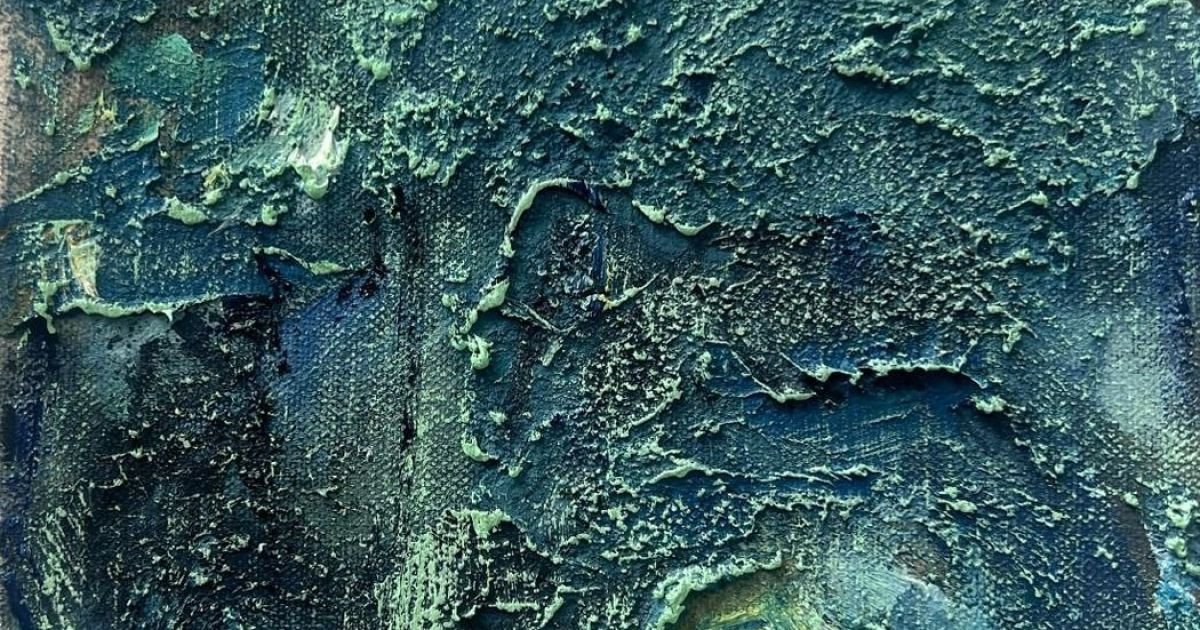
NB: Yes, I had a great teacher, Phillip Allen, an abstract painter who exhibits internationally. In fact, all the tutors are highly accomplished artists, so they were able to guide us and explain how the art market operates today. The lectures, which the university invited renowned speakers from around the world to deliver, also proved to be valuable. Last year, a philosophy course was offered for the first time. It was led by Professor Johnny Golding from New York and focused on the relationship between philosophy and the visual arts. I found it very inspiring – for example, I learned about Jean-François Lyotard, who developed the concept of figural painting, which is neither abstract nor figurative. These are forms that may resemble something human and realistic, but that is not their purpose. It is about the moment in between, when meaning is just emerging and not yet captured in the form of a recognisable representation. It was lovely to hear from Professor Golding, when she visited me in my studio, that she sees this in my paintings.
[ad_2]
Source link