
Why not bring an accent wall into the bathroom, as seen in this San Miguel de Allende, Mexico, home? “We floated the copper bath tub in front of a wall tiled in a classic Moorish pattern that we recolored to feel contemporary,” says Jeffry Weisman, AD Pro member and cofounder of the San Francisco–based firm Fisher Weisman Brugioni. “We love the graphic pop in a room with tile floors, beamed and thatched ceilings, and white plaster walls.”
Can you DIY an accent wall?
As these accent wall ideas prove, it is entirely possible to design a DIY accent wall, whether you chose to do so with paint, by hanging a gallery wall of art pieces, by installing a peel-and-stick geometric wallpaper mural, applying paneling, or taking another route.
Can you incorporate an accent wall into a small space?
Just look at the array of accent wall ideas above! You can certainly include an accent wall in a small space or room for an eye-catching surprise. Accent walls will add instant personality to a powder room, petite apartment living room, and many other spaces short on square footage. A small space is an excellent opportunity to try a bedroom accent wall that mimics the effects of a headboard, for example.
Do accent walls complement all aesthetics?
Accent walls will shine in any type of home, regardless of one’s home decor style. That said, they are more often seen in vibrant, eclectic spaces and appear less often in minimalist homes. Accent walls generally serve to provide a pop of color within a room, according to interior design experts, so don’t shy away from paint colors that make a bold statement. Though we recommend these paint color ideas for living rooms, a look through this guide may help you narrow down a color scheme between the accent and additional walls for any room in your home.
What rules do designers swear by for accent walls?
Home design pros say that when incorporating an accent wall, “Do it with intention or don’t do it at all,” Gilmore says. This means really focusing on amping up a room’s visual interest. “When it comes to creating an accent wall, my rule is to make a statement,” Chiprut adds. “I recommend going big and bold. It’s your opportunity to express your personality in your home and create a stunning focal point.”
Are accent walls trending?
Accent walls are still having a moment, per our designer sources. The key is to keep your personal interior design preferences top of mind. “Accent walls will always be in style as long as it feels authentic to you and your design style,” Chiprut says. “It’s about how you incorporate them into your home.”
What color paint is most popular for accent walls?
Whether you’d like to go bold or stick with neutrals is entirely up to you. Designers are seeing a mix of both categories. “Deep, saturated colors create a striking impact when they envelop a space from floor to ceiling, seamlessly tying everything together,” Beitler says. “However, layered whites on textured surfaces offer a beautiful, tone-on-tone effect, adding depth and subtle sophistication.”
What are the trending accent-wall colors for 2026?
Bring on the moody, earthy tones in 2026, says Brown, who cites “deeper, nature-inspired hues” as being on the rise as it pertains to accent walls. “Olive and moss greens, tranquil teals, mustard yellows, and warm mahogany and rust reds are leading the way, bringing richness and warmth to interiors without overwhelming the space,” he says.
Should accent walls be darker or lighter?
When in doubt, make your accent wall darker than the walls around it, designers say. “A darker accent wall with lighter walls makes the accent wall a focal point, immediately drawing your eye to it,” Papier explains.
How can you create an accent wall on a budget?
If you’re looking to design an accent wall on a budget, using paint is the most affordable solution, Gilmore notes. That said, she offers a few more elaborate accent wall ideas that won’t break the bank. “If you want to add some interest, painting a design—something as simple as a stripe or a checkerboard—is a great way to add a pop while on a budget,” the designer says.
Weaving an accent wall into a smaller space requires less paint or wallpaper and is therefore a budget-friendly move that can look quite chic too. “It’s nice to have a little unexpected pop in a tinier area of the home, like a laundry closet or behind a desk in a home office,” Gage says. Adds Goldberg, “If papering the entire room is out of the budget, a natural grasscloth wallpaper makes a wonderful accent wall. One wall of grasscloth adds texture and warms the space with dimension.”
Finally, consider installing a fabric panel or tapestry to create an accent wall sans paint or paper, Chiprut suggests. “This works especially well in bedrooms, kids’ rooms, or small spaces where paint or wallpaper might feel too permanent or overwhelming,” she says. “It’s renter-friendly, easily swappable, and full of charm.”
Are two accent walls too many?
The number of accent walls in your home is less important than whether or not the walls you design suit your space. “As long as they are complementary to your existing decor, I don’t see any reason why there should be a limit on the number of accent walls in a house,” O’Gara says. That said, he advises sticking to just one per room. “Think of it like styling an outfit,” adds Gilmore. “You’re not going to wear all the jewelry in your jewelry box, but you will have a focal piece with some supporting pieces to finish the look.”
What wall within a room should be an accent wall?
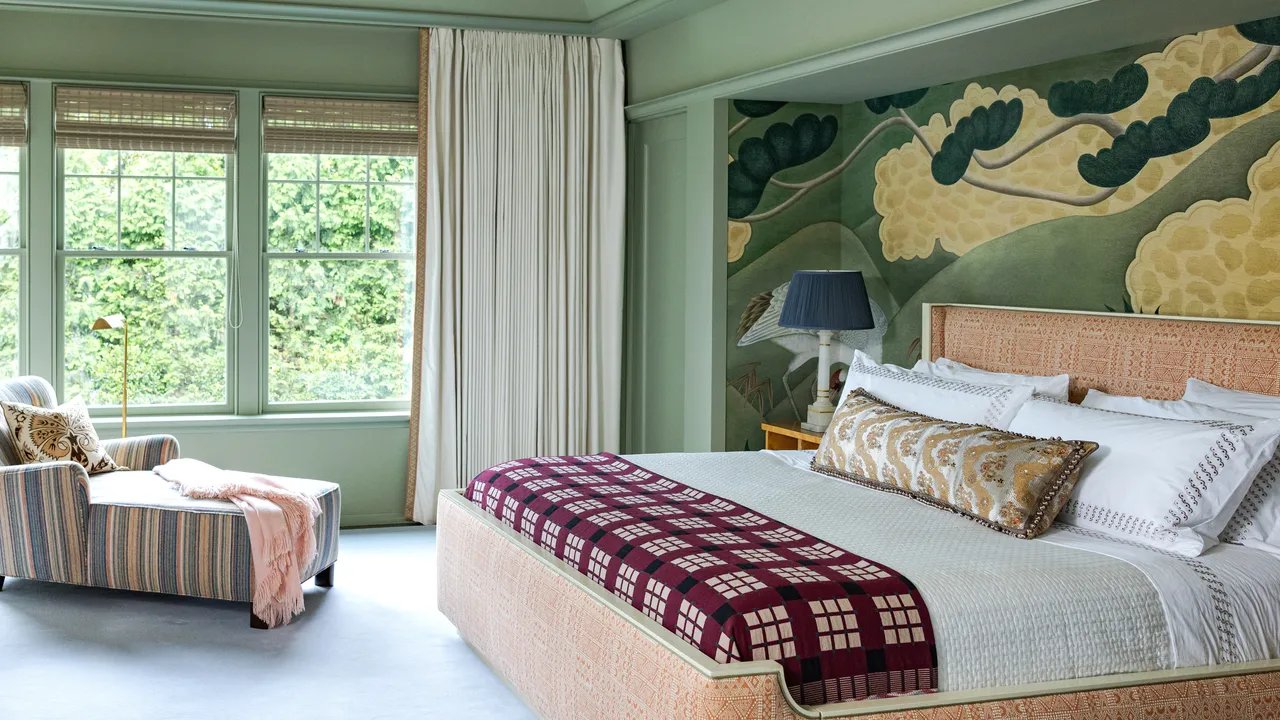
You should select your accent wall based on where in a space the eye goes first, Smith says. “Generally speaking, the accent wall is the one you encounter first as you enter a room,” she explains. “This might be the bed wall in a bedroom, the fireplace wall in a living space, or even the ceiling for a more unexpected design moment,” Brown adds.
Another tactic to use is to place an accent wall in a spot that you think deserves a little extra attention. “We tend to include accent walls in spaces to highlight interesting architectural features or direct the eye to a certain wall in a space,” says Robbins. “For example, if there is a beautiful archway in a space, an accent wall behind the archway can help further showcase the detail and draw the eye to a focal point. This creates layers and interest in a room.”
Where shouldn’t you put an accent wall?
If an accent wall is going to make a space appear disjointed, then it doesn’t belong. “An accent wall should be treated like a piece of art: Something that elevates the ambiance of the space rather than distracting from it,” Smith says. “We’re less drawn to accent walls that rely solely on a bright color or isolated wallpaper without a deeper connection to the room’s overall design.” Additionally, do not introduce an accent wall if a wall is short, visually busy, or heavily broken up, Brown advises.