
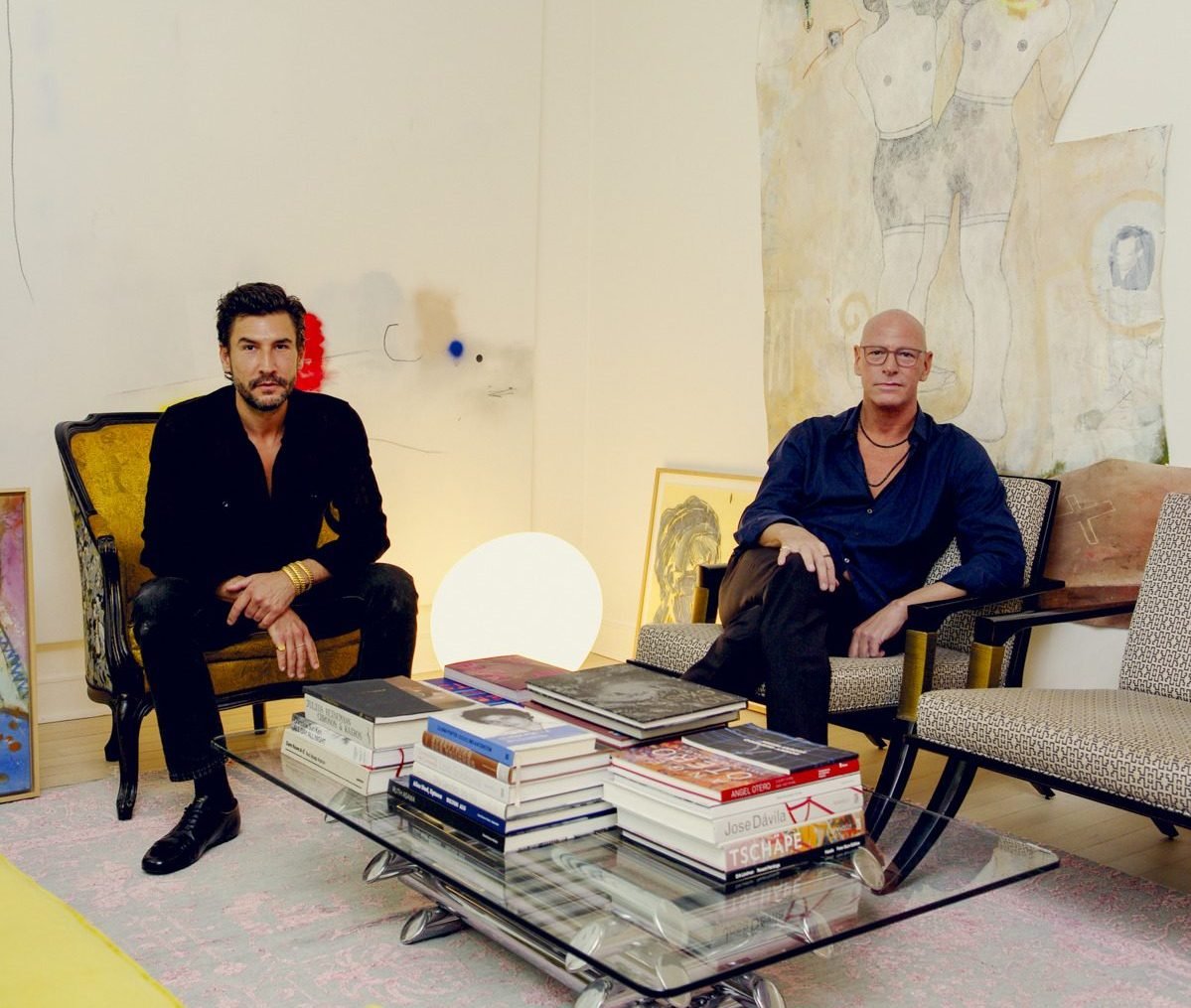


“It’s true, Elliott is drawn to rigor, internal logic, to works that echo architecture or system breakdowns,” Padilla explains. “I respond more viscerally, emotionally, physically. I trained as a dancer in my youth, so I react to passion, movement and feeling.” As we move from room to room, these differing sensibilities begin to intertwine, blending into a calibrated interplay of aesthetic tension and unexpectedly resonant parallels.
“Our acquisition process usually starts with one of us falling in love with something and showing it to the other,” Padilla says. “If we’re both into it, it happens fast. If there’s hesitation, we give it space, talk it through, sleep on it. It’s not about convincing, it’s about alignment.”
Even when they don’t immediately agree, the couple says they trust each other’s instincts, and they never buy anything that doesn’t feel like them. “The final call is mutual, even when one of us is louder about it.”
Still, every collector remembers that first acquisition—the one that dissolves hesitation and turns curiosity into a habit. For Trice, it came through a serendipitous encounter: while walking his dog on Long Island, he noticed an artist’s studio and decided to step inside. What he discovered was the spellbinding practice of Sam Still, whose work balanced the meticulous accumulation of delicate pen marks with dense political symbolism in the form of a bomb.


Still, their relationships with artists remain important, and many of their most meaningful acquisitions have come directly through recommendations from artists themselves, they acknowledge. “They’re the best advocates for one another, and we’re always curious to hear who they’re watching, collecting and championing,” they notice.
As the couple prepares for their next life and collection chapter, they remain attentive to what’s happening in Puerto Rico, Mexico City and Uruguay, and try to visit every art fair they can. “You really do have to see everything, that’s how you sharpen your eye,” they acknowledge. “Our curiosity is constant, and our learning comes from all angles: studio visits, curator conversations, dinners, deep hangs.”
For Padilla and Trice, collecting is about so much more than transactions. It’s about proximity, relationships and reciprocity. “We’re not just acquiring works, we’re investing in people,” they say. This is something that will guide their next path as collectors, as they plan to settle in Uruguay and launch a residency program—with much more space for art, artists, meaningful encounters and generative exchanges of perspectives and backgrounds, like those that brought this passionate collection together, starting with their own couple. “When we connect to an artist’s story, practice and presence, it changes how we live with the work and it becomes part of how we move through the world.”

More in art collectors
