
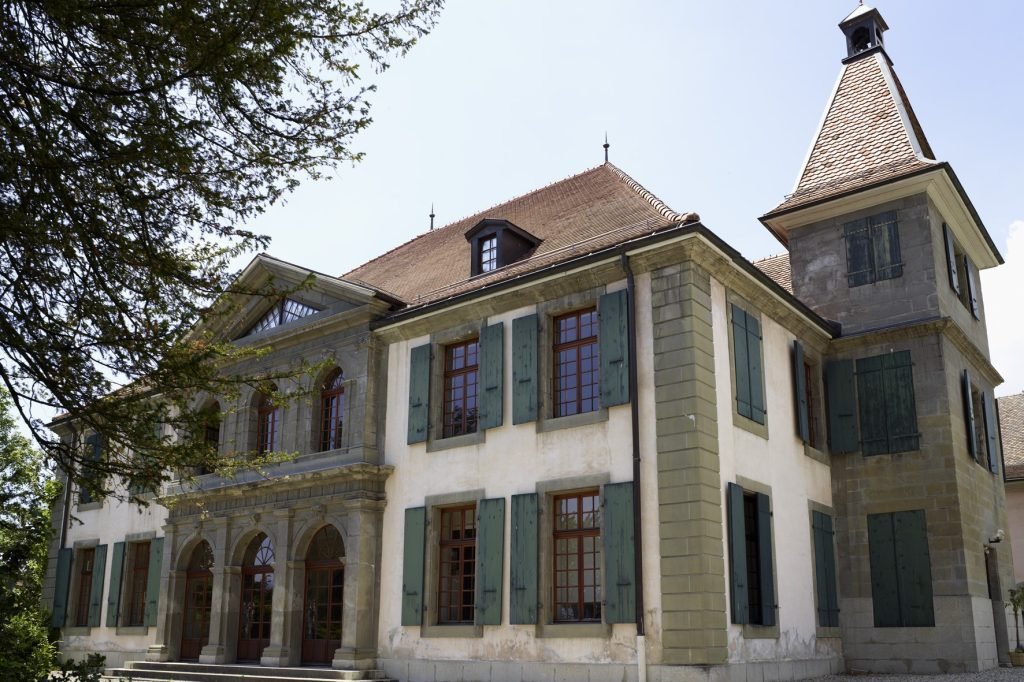
The two-stage competition will select an architect to upgrade the art museum which is dedicated to outsider art and is located within the city’s historic Château de Beaulieu.
The project aims to improve exhibition spaces and enhance displays at the cultural landmark which was founded in 1976 and is experiencing growing visitor numbers.
Key aims include respecting the historic site and responding to the museum’s inclusive identity while also upgrading environmental sustainability in line with local targets.
The competition coincides with the museum’s 50th anniversary and the launch of the exhibition ‘Art Brut in Switzerland: From the Origins of the Collection to Today.’
According to the brief: ‘The contracting authority intention is to allow the Musée de l’Art Brut to expand while remaining at its current site. The aim is to provide a museum whose architectural and landscape design meets ambitious criteria for site integration, functionality, innovation, and sustainability.
‘Preserving and enhancing the quality of the Château de Beaulieu, as well as the site’s landscape heritage, is a priority. The contracting authority intends to create an inclusive space that considers the needs of users, staff, and local residents, ensuring a rational and efficient implementation that fulfills expectations for environmental protection and sustainability.
‘Specifically, this involves optimizing the building’s footprint and technical systems to ensure maximum preservation of open ground, prioritizing permeable surfaces, and integrating all possible measures to promote biodiversity in accordance with the Lausanne Action Plan.’
Located on Lake Geneva, Lausanne is a historic city of around 140,000 residents. The Collection de l’Art Brut is a city centre museum dedicated to showcasing art from non-traditional backgrounds.
The anonymous competition is divided into two stages with the first stage focussing on urban form and open to architects or architectural groups.
During the second stage – which focuses on the project itself – shortlisted parties will be required to form multidisciplinary teams including civil engineers, MEP engineers, building physicists, and landscape architects.